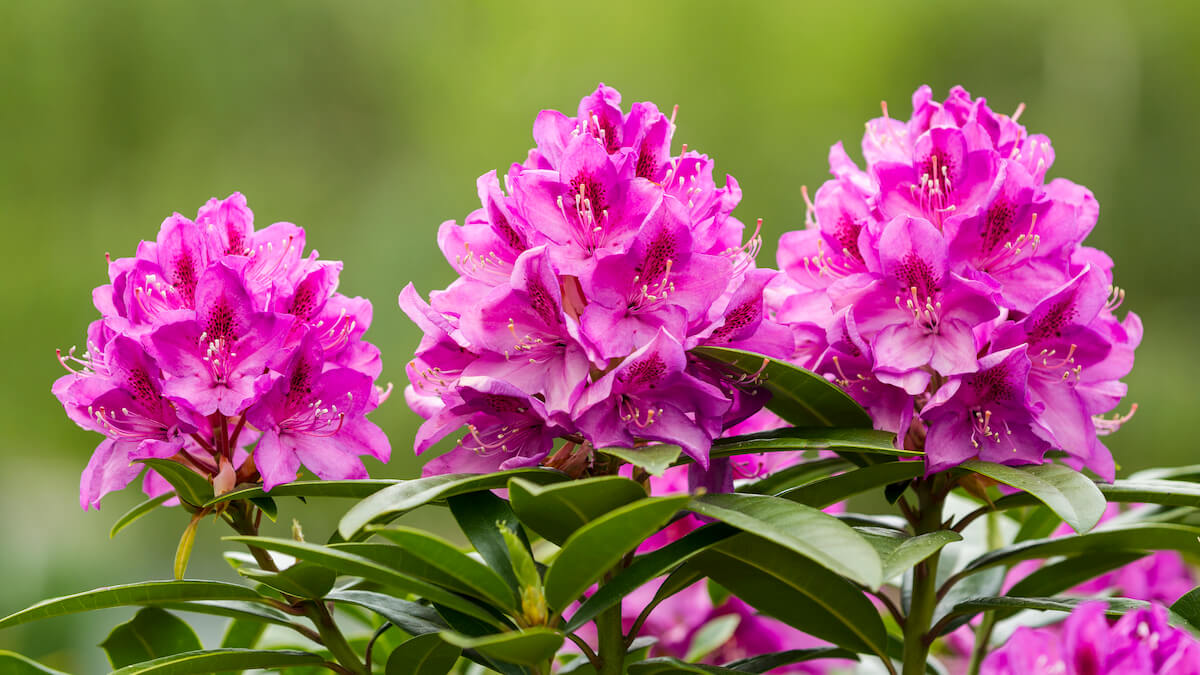
Azalea and Rhododendron Pruning and for or all other evergreen shrubs that flower in late winter, spring, or early summer.
The most basic form of pruning – often sufficient, is simply to dead-head the old flowers – before they are allowed to make seed – by cutting back to first set of buds.
If any shoots spoil the overall shape of the shrub, they can be cut back to a suitable position.
Azaleas, Rhododendrons, Camellias, evergreen Viburnum, evergreen Berberis, Brachyglottis (Senecio), evergreen Ceanothus – after flowering, Choisya, Cistus – only if necessary; not hard, Daphne (minimal), Garrya eliptica, Gaultheria, Kalmia latifolia, Leptospermum, Mahonia, Olearia, Osmanthus (Early flowering species), Pieris, Skimmia.
When & How to Prune Rhododendrons & Azaleas
The timing of pruning is absolutely vital to ensure flowers for the following year. All pruning for Rhododendrons and Azaleas should take place after flowering in early to late summer.
Rhododendrons and Azaleas flower from buds produced at the end of the shoot. The shoot and the flower bud, start to form and then develop in early summer – soon after the current flowers have withered. The flower buds will only form on the end of a maturing shoot – normally from Jun-July.
New shoots are encouraged – mainly by simply deadheading the old flowers before the seeds start to set. Taking off the flower bud will ensure that all the growth resources on that shoot, will go towards growing the new shoos – and flower buds – rather than setting seed. The setting of seed withy Rhododendrons as with any other plant, takes a lot of energy out of the resources available.
Prune too late, and the resultant new shoots will not have enough time in the year’s growth cycle to produce flower buds – but will instead form another but, which is simply a new leaf bud for next year.
If the shrub is hopelessly overgrown, then it can be cut back quite hard in April – but with the risk of losing the following year’s flowers. – See below for rejuvenation pruning.
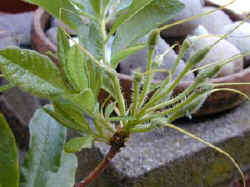
Azalea mollis showing seed-heads from faded flowers – normally in May/June
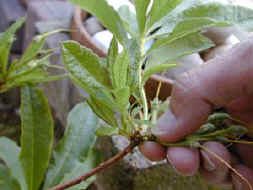
A gentle twist or snapping action easily breaks off the deed-head. Take care not to damage the surrounding new shoots.
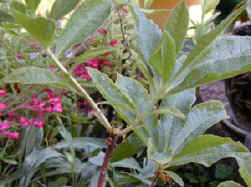
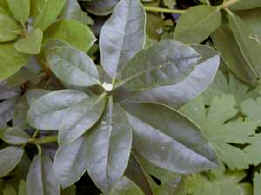
The new side shoots will now develop into flower buds ready for your next year’s display.
Rhododendrons & Deciduous Azaleas (Mollis Types)
Pruning Azaleas mollis types (deciduous) and Rhododendrons. They are simply ‘dead-headed’ right after flowering. It can be done with a snapping action of thumb and finger
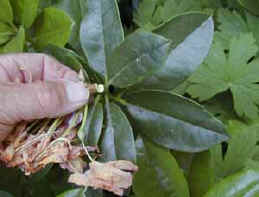
With Rhododendrons, you can simply snap off the old flower head – but make sure that you do not damage the new bud growth. It is important to deadhead Rhododendrons to ensure good flowering growth for the following year.
Rejuvenation Pruning for Azaleas & Rhododendrons
Because these are generally slow-growing shrubs, there is often a tendency to plant them too close to other shrubs or obstructions. This will mean that in years to come – just as the shrub is reaching its full glory, there will be a need to take drastic action by way of cutting down hard.
All of the large Rhododendrons and Azaleas – both deciduous and evergreen – will respond well to be cutting back hard to reduce size. If there is any doubt with a large precious tree, then cut it back a third of its growth over three years. This will also have the effect of steadying the resultant new growth, for it cut back hard in one operation, then it is certain to send up some very vigorous growths.
They can be cut back hard in the middle of winter, but I prefer to do this in early spring – just after the flowers have faded (Saves a little time on dead-heading as well!). The stumps will soon shoot out and try to regain its former size in as few years as possible!
