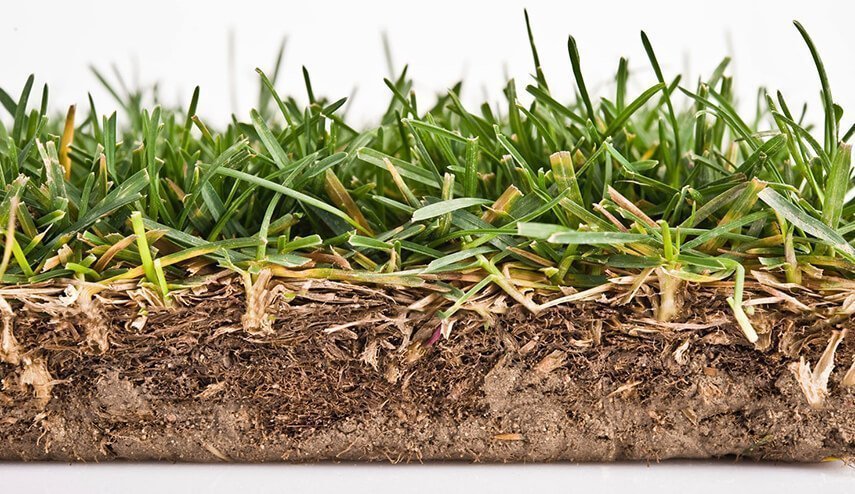
Lawn thatch is something which you need to control if you are to have a lush, healthy lawn.
Having some of it in your lawn is a good thing. However, too much can negatively affect the health of your lawn which often leads to other problems like moss invasions, weed takeovers and the onset of disease.
So what is lawn thatch? What causes it and how do you control it?
This article explains all.
What is Lawn Thatch?
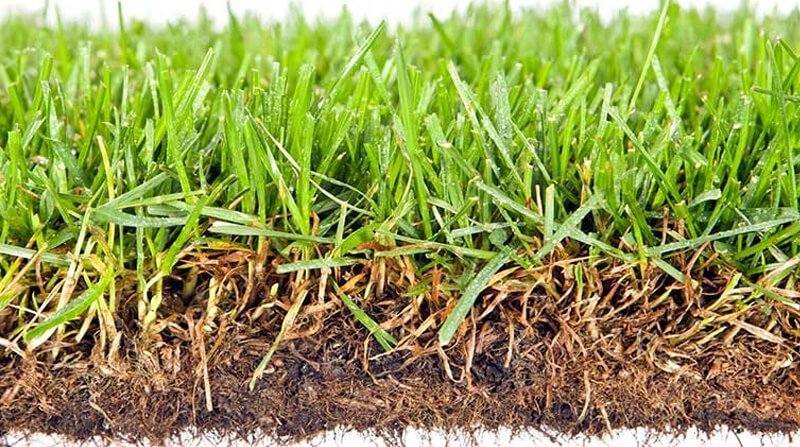
Lawn thatch is a fibrous layer of predominantly dead and some living grass roots, stems and runners. This layer lies between leaves of the grass plant above the surface, and the root system below.
It is broken down and decomposed naturally by microbes, bacteria and fungi in the soil.
In an ideal world, it would break down at the same rate at which new grass grows and therefore, it should never cause a problem.
However, thatch contains a chemical compound called Lignin which is slow to break down. Unless conditions are perfect, which they rarely are, new grass often grows more quickly than the dead material is broken down and so it builds up.
The Pros and Cons of Lawn Thatch
Lawn thatch can affect your lawn either positively or negatively. It can contribute to your lawn’s health and vigour, or it can cause problems.
Having a little (around a quarter of an inch) in your lawn is a good thing.
It protects the crown of the grass plant from damage and disease while still allowing water, oxygen, and nutrients to penetrate the soil and get into the root zone.
It also prevents the soil from the drying effects of the sun and wind in the summer and from frost and cold in the winter.
On the other hand, too much of it (half an inch or more) will start to cause problems.
The Causes of Thatch Build-Up
As you now know, the build-up of lawn thatch occurs when new grass grows quicker than the old, dead material is decomposed.
The rate at which lawn thatch is broken down depends on the amount of microbial activity in the soil. However, this microbial activity is affected by many things, including;
Over-Fertilising
Over fertilising is one of the biggest causes of the accumulation of lawn thatch.
Lawn feed contains nitrogen which causes the grass to grow quickly. If you apply too much fertiliser or if you apply it too often, grass grows at a far higher rate than microbes in the soil can break the dead material down.
Soil Type
Different types of soil contain more micro-organisms, bacteria and fungi than others.
For example, soils with high clay content often lack oxygen and as a result, have fairly low microbial activity. With fewer micro-organisms to break down the dead material, the quicker it builds up.
Loamy soils, on the other hand, generally team with bacteria and microbes and so the build-up of thatch is slowed down.
Soil Compaction
In the same way that heavy clay soils lack oxygen, so does compacted soil.
Without oxygen, there won’t be any micro-organisms to aid in the decomposition of dead organic matter.
As a result, thatch just builds up.
Acidic Soils
Acidic soils (pH 5.5 or lower) can’t sustain thatch decomposing micro-organisms.
The more acidic the soil, the more rapid the build-up of lawn thatch.
Improper Watering
Watering too much or too shallow causes shallow rooting of grass. This can cause thatch to grow quicker than it should.
Grass Type
Generally, ornamental lawns which feature bent grasses and fescue grasses produce more thatch. This is due to the ‘spreading’ nature in which they grow.
That said, there are different types of bent and fescue grasses, all of which produce thatch at different rates.
Some grasses like Ryegrass don’t produce any at all. This is because it grows in tufts instead of spreading.
This is why ryegrass lawns are so much easier to look after – especially if you’re not so green-fingered.
The Effects of Excessive Thatch
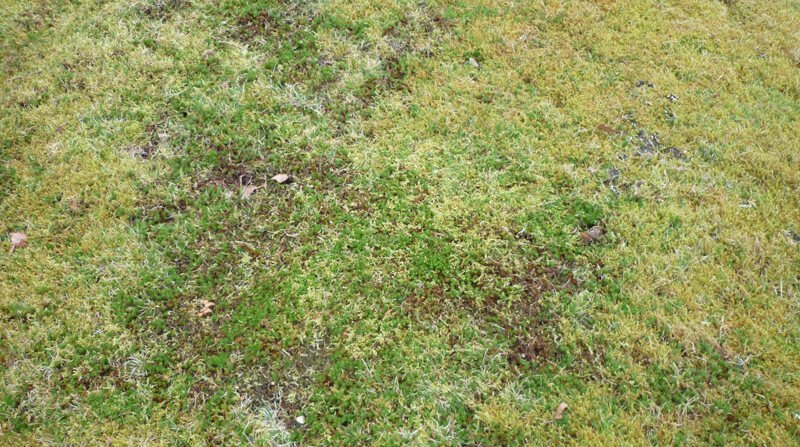
When thatch levels build up over half an inch it starts to have a negative effect.
It can cause the following problems;
The Grass Becomes Weak and Sparse
Ordinarily, water carries oxygen and nutrients into the soil where they are consumed by the roots of the grass.
When there is too much thatch, those nutrients can’t penetrate the soil and so the grass is starved of what it needs to produce food and grow.
As a result, it becomes weak and sparse.
Sometimes, the grass will grow roots into the thatch layer so it can consume the water and any nutrients which are held there. This makes the problem even worse.
An Increased Risk of Drought Damage
The barrier caused by thatch prevents water from penetrating the soil, so it dries out.
As a result, the grass grows roots into it.
During the summer heat, lawn thatch becomes very dry as the moisture evaporates. This completely starves the grass of the water it needs to survive/
Moss and Fungal Disease Start to Spore
Because lawn thatch prevents water from reaching the soil, it lies there in the surface and within the fibrous layer when it rains.
During autumn and winter this surface moisture provides the perfect environment in which moss and fungal diseases can spore and spread very quickly.
How to Remove Thatch and Prevent its Build-Up
If you have lots of thatch in your lawn then chances are, it has caused other problems like moss and weed infestations. As such you may need to fully renovate your lawn.
Lawn renovation is well beyond the scope of this article so go here and read my Lawn Maintenance Guide.
However, the following lawn care practices when done as part of an annual lawn care regime will keep microbial activity high, control the build-up of thatch and keep it to a healthy amount;
Scarify and Rake Your Lawn
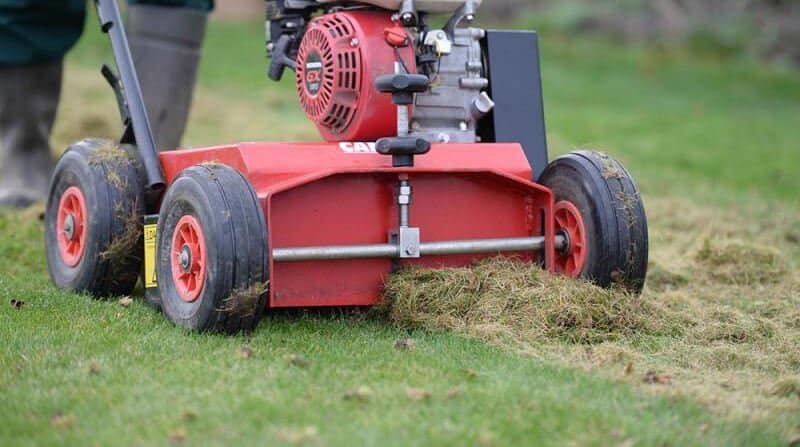
Scarifying and raking physically removes thatch, dead foliage and moss from your lawn.
Scarifying is important as it removes thatch from around the base of the grass plants which allows are, water and nutrients back into the soil.
Raking controls the build-up of thatch by removing dead foliage and growth from the surface.
The best scarifiers often have changeable cartridges with vertical blades for dislodging thatch and spring tines for controlling thatch and moss from above the surface.
It’s important that you choose the right time to scarify and this guide shows you how to scarify a lawn, step-by-step.
Aerate Your Lawn
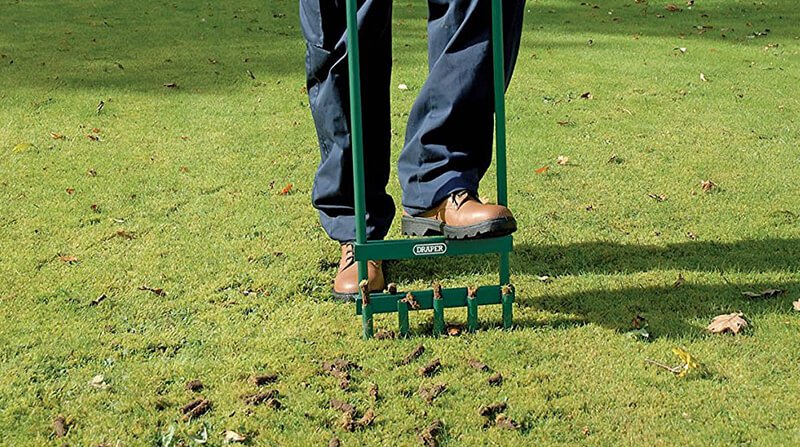
Regular aeration improves the penetration of air, water and nutrients into the soil.
This, in turn, encourages microbial activity and increases the breakdown of thatch.
Hollow-tine aeration removes cores of turf from the lawn. As such it’s an excellent way of removing thatch, reducing compaction improving penetration.
However, if the soil isn’t compacted, then spiking or slitting the soil is best.
Use Fertilisers Correctly
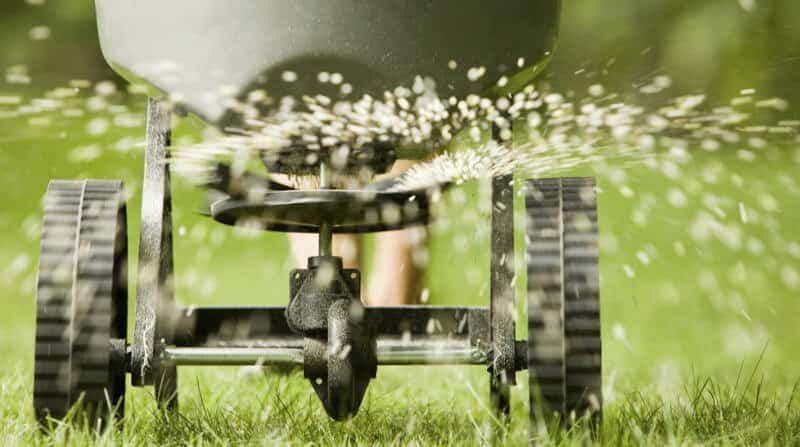
Your lawn needs chemical nutrients in order for the grass to be able to produce food and grow.
However, the overuse of fertilisers causes the grass to grow quicker than the dead material can be broken down.
Be sensible about how often you fertilise your lawn and how much you use.
Top Dress Your Lawn
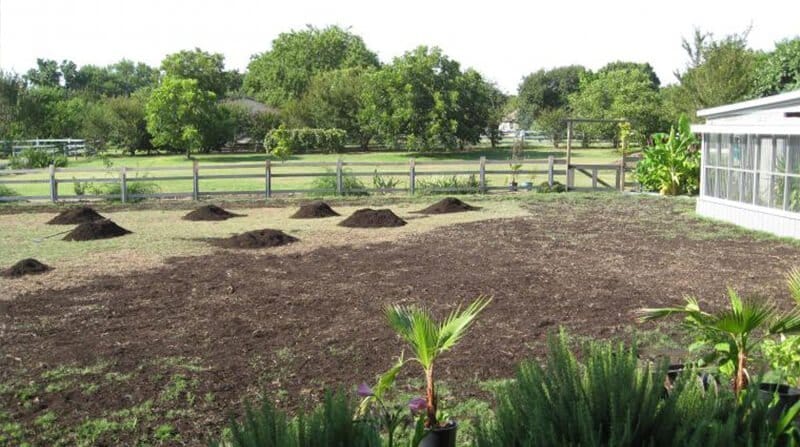
Top-dressing adds fertile soil to the surface of your lawn.
Soil which contains microbes and fungi which help to increase the breakdown of organic material.
This is especially beneficial after scarifying and/or hollow tine aeration.
However, it can be expensive and only recommended if you have a blowing green or ornamental lawn.
Avoid Overwatering
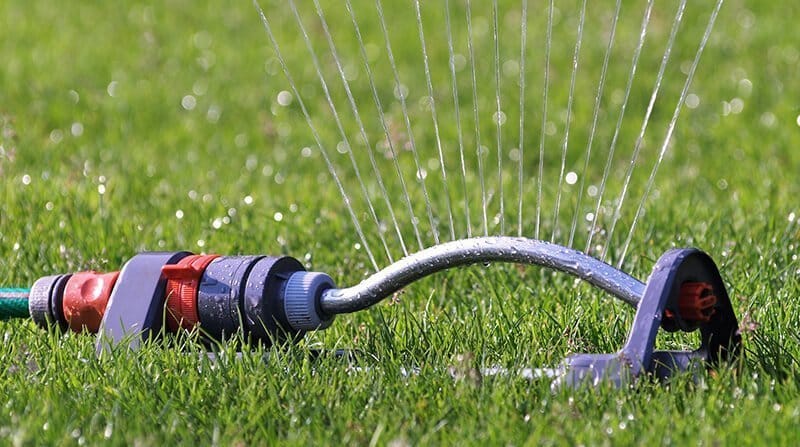
Your lawn only needs around an inch of water a week to stay healthy.
Watering too much can kill the microbes in the soil which will have an impact on the rate at which thatch accumulates.
You should only water your lawn in dry conditions.
Water once a week to a depth of about an inch. That’s all your lawn needs.
In Conclusion
Lawn thatch occurs naturally in most lawns but if left to build up, it can cause a host of other problems.
That said, keeping it in check isn’t difficult to do.
By following a simple annual lawn care program and doing the right jobs at the right time, you can keep this organic matter to a minimum.
And in doing so, keep your lawn free of moss, weeds and other diseases.
