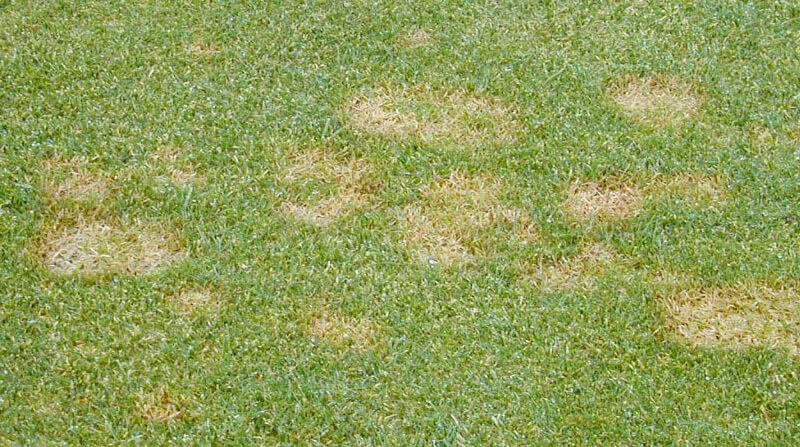
If you’ve got small brown or straw coloured patches on your lawn then chances are, your lawn has a fungal disease called Fusarium Patch, or Snow Mould.
If not treated quickly, these small brown patches can grow to 30cm in diameter, often joining up with other patches to make your lawn look a mess.
When it gets out of hand like this, it can be very difficult to control so treat it as soon as you see it.
What is Fusarium Patch?
Fusarium Patch is a disease most commonly found in fine turfs or old turfs and mostly affect the following grass types;
- Annual Meadowgrass
- Bents
- Fescues, and
- Perennial Rye-Grass
It’s caused by the fungus Microdochium nivale but can sometimes be mistaken for another fungal disease called Take All Patch.
It can survive in temperatures as low as -20°C (-4°F) but its optimal temperature for growth is between 12-19°C (54-66°F). So in theory, attacks can occur at any time between spring and autumn but are usually masked by good grass growth. They’re most visible in the autumn when the weather cools and grass growth slows down.
What Causes it to Develop?
The fungal spores that cause Fusarium Patch are present in nearly every lawn, nearly all of the time. When climatic conditions are just right, these spores become very active.
The fungus needs surface moisture to infect the leaves of the grass and autumn’s heavy morning mists and dews, and reduced daylight hours provide the perfect environment. Low air circulation can also contribute.
Also, grass with high nitrogen levels is more prone to attack, as are lawns that are laid on alkaline soils.
Fusarium is easily spread across a lawn as it creates spores on the leaves of the grass which can be spread by a breeze or by people walking on the grass.
How to Identify Fusarium Patch
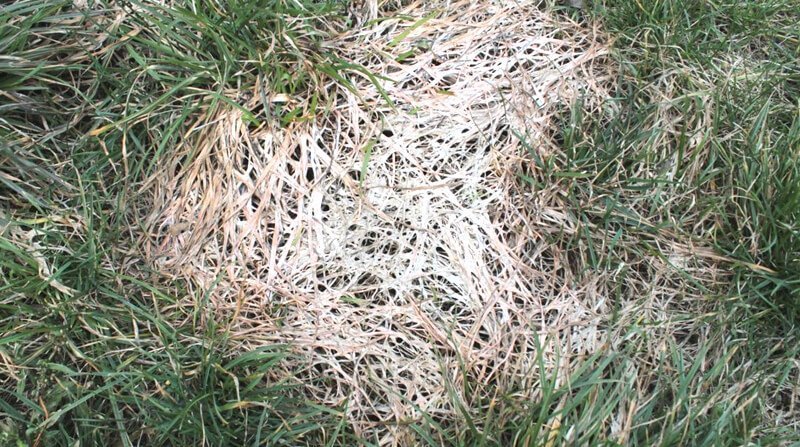
Fusarium is pretty easy to spot;
- You’ll notice small patches of grass which turn yellow and then brown as it dies
- It has a very short incubation period so it can seem to appear from nowhere and spread quickly with patches of dead grass growing as big as 30cm in diameter. Sometimes these patches can join up to create one, really big patch.
- Sometimes you’ll see a whiteish/pinkish fungal growth that resembles a spiders web or stretched cotton wool, similar to Dollar Spot.
So What’s Snow Mould?
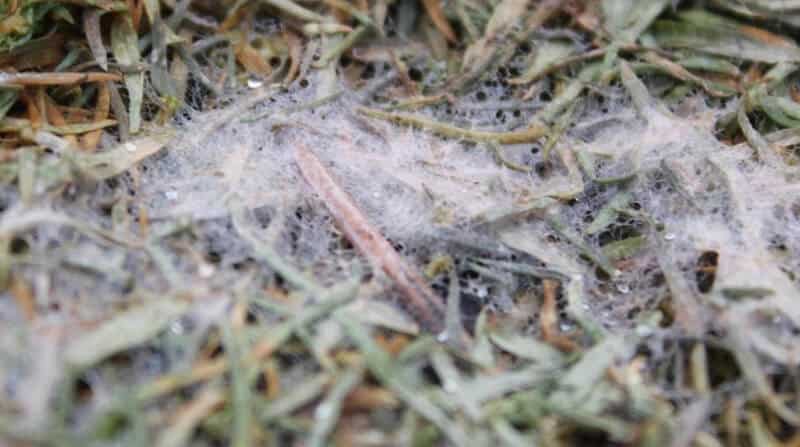
Snow Mould is exactly the same disease as Fusarium Patch but it occurs after prolonged periods of snow cover.
It’s caused by a consistent temperature of 0°C (32°F) and higher than normal levels of carbon dioxide. It creates a greyish coloured mould, rather than the white/pink mould that can be seen in the autumn.
How to Cure Your Lawn of Fusarium Patch and Snow Mould
Depending on the severity of the attack, there are a couple of ways you can go about treating your lawn for Fusarium Patch.
Do it Yourself
If you catch it early you need to act quickly before it spreads and gets out of hand.
There is only one fungicide that amateur or home gardeners can use. It’s called Provanto Garden Lawn Disease Control (link below) and it actually does a pretty good job of killing and/or controlling the spread of Fusarium spores. Especially when caught early.
Simply add it to a specified amount of water and apply it to your lawn using a watering can or knapsack sprayer.
No products found.
Hire a Lawn Care Expert
However, if you have a major problem and the disease has taken over your entire lawn, Provanto Garden Lawn Disease Control might not be strong enough.
In which case, my advice would be to call your local lawn expert. He/she will have access to, and be licensed to use professional-grade fungicides which will be much more effective in these circumstances.
How to Prevent Fusarium Patch and Snow Mould From Occurring (or Re-Occurring)
I’ve said it time and time again, on this website…
…But the prevention of disease, weeds, moss attacks and anything else comes down to a sensible lawn care calendar.
To prevent Fusarium Patch and Snow Mould from becoming an issue, keep the following in mind;
Scarify and Aerate Your Lawn to Improve Drainage
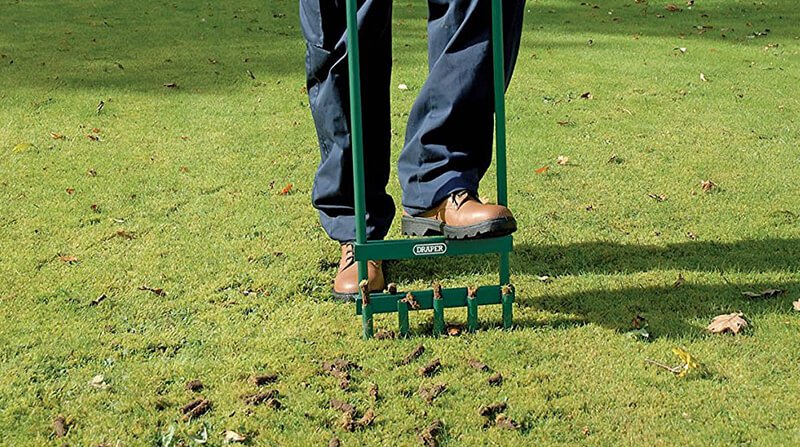
As we know, the fungus that causes Fusarium Patch and Snow Mould need surface moisture to spore.
Excessive lawn thatch prevents moisture from being able to penetrate the soil. As a result, it sits on the grass leaves and in the thatch layer, creating the perfect environment for the fungus to spore.
Scarifying your lawn will remove excess thatch so water and moisture can reach the soil and root zone.
Also, regular spiking of your lawn will open up the soil so water and moisture can get into the soil instead of sitting on the surface. Hollow-tining your lawn will also relieve soil compaction which again, makes it easier for water and moisture to work its way into the soil.
Read: What’s the Best Lawn Scarifier? My Top Picks
Remove Heavy Morning Dews
Removing heavy dew from your lawn in the mornings will also help prevent Fusarium Patch from forming. Take away the surface moisture and you remove the environment in which the fungus spores.
Simply take a hosepipe or a switch (a long, pliable rod) and drag it across the surface of your lawn to knock the excess moisture off the grass leaves. Do it a few times in different directions and you’ll see the surface of the grass will be significantly drier.
Mow the Lawn (at the Correct Height) Regularly
I’ve said it numerous times.
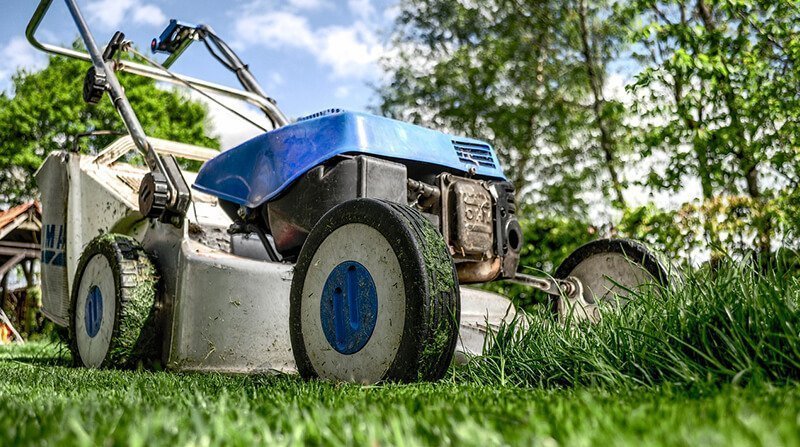
Mowing the lawn regularly keeps the grass strong and healthy. Growth will slow during the autumn and it’s best to keep your lawn mower on a higher setting.
That said, if you’ve mowed your lawn regularly during the spring and summer your lawn should be thick, lush and strong.
If you cut it infrequently, chances are your lawn won’t be as lush and thick as it should be. It definitely won’t be as strong an as resistant to disease as it should be.
Read: Choosing the Correct Mower For You and Your Lawn
Improve the Environmental Factors in Your Garden
This can be difficult but it’s doable.
If your lawn sits under shade, take a look at what’s causing the shaded areas and reduce the shade to let more sunlight get to the grass. If it’s cast by buildings there’s not much you can do. But if the shade is being cast by trees and hedges, there are things you can do;
Make sure tree branches are at least 2 meters from the ground. Also, try pruning and thinning out the branches to allow light to pass through them. The same goes for hedges, keep them low and thin them out.
This will also improve airflow across the lawn which will help keep the grass drier.
Also, consider your fences. Slatted fences will allow air and light to pass through them. Solid fences do the opposite.
Use the Correct Fertilisers at the Right Times

Lawns that have a high nitrogen content are more susceptible to attacks of Fusarium Patch in the autumn. This is because it causes the grass to grow quicker than it would naturally and weakens it so it can’t fight off disease.
The most common cause for this is the application of a high nitrogen, summer fertiliser too late in the season. Avoid applying a summer fertiliser after August (depending on the weather patterns).
Fertilising your lawn with an autumn fertiliser in September and applying a winter feed in November will harden the grass to the stresses of these seasons.
If you want to know more about choosing the right fertiliser and which ones I recommend, read this buyers guide.
In Conclusion
Fusarium Patch and Snow Mould isn’t something to panic about if you catch it early, treat it and make the right adjustments to your lawn care regimen.
However, it can spread quickly and when left to get out of hand it can look horrible. If it is left to spread, you might not be able to fix it on your own. In which case, hire a professional.
Now it’s Over to You
Do you, or have you had Fusarium Patch or Snow Mould in your lawn?
If so, please leave a comment below. I’d love to hear your experiences and see your questions.
