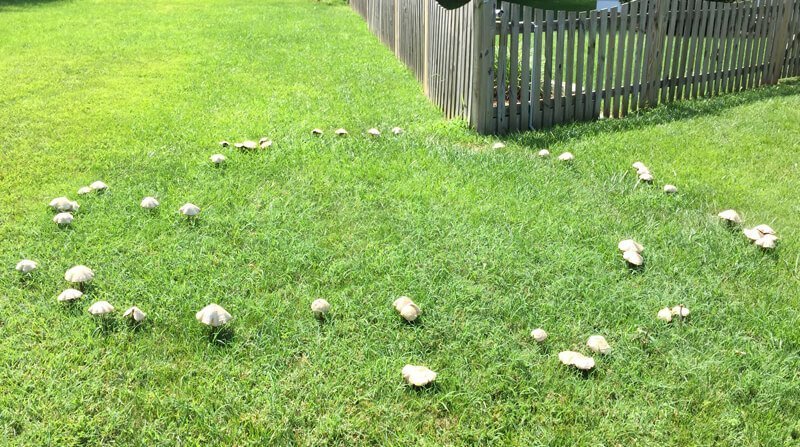
Fairy Rings are also commonly known as Fairy Circles, Elf Rings, Elf Circles or Pixie Rings.
Whatever you want to call them, Fairy Rings are the work of dancing elves.
That’s what European Folklore would have you believe anyway.
In reality, they’re a fungal infection that can cause rings of dead grass and toadstools in your lawn. And in all honesty, they can be a real problem because they can grow in neglected lawns, finely manicured, well looked after lawns and sports turf.
Some fairy rings are simple to deal with but others can cause major problems and expense.
What Are Fairy Rings?
A Fairy Ring is a naturally occurring ring of fungi that can produce rings or arcs of dead grass, lush green grass that grows quicker than the rest of the lawn, or mushrooms.
You’ll often see mushroom rings in woods and forested areas where they can be decades old. These rings can grow to over ten meters in diameter.
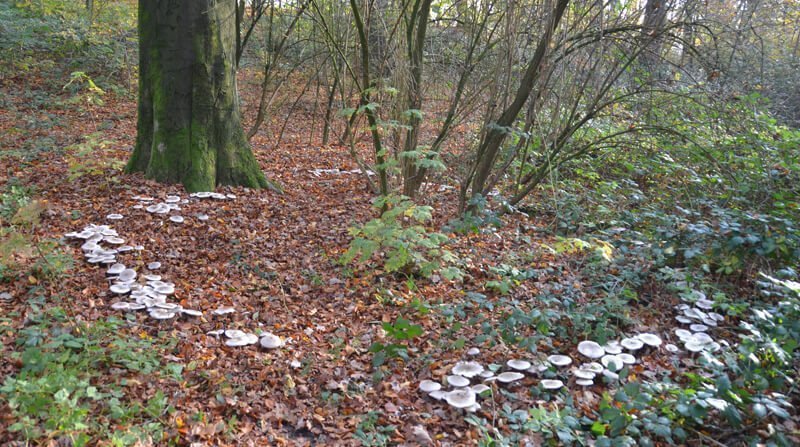
When you see them in the woods, they’re a pretty spectacular sight and so much folklore surrounds them.
In the UK some would have you believe they’re the work of dancing elves. Go to France and you’ll hear them referred to a ‘Scorcerer’s Rings’. In Germany, some believe they’re the sight of dancing witches while Dutch superstition says the circles show where the devil has churned his milk.
The common superstition is that if you disturb a Fairy Ring you’ll be cursed by whatever created it.
But to me, finding a Fairy Ring in your lawn is the curse itself, because, well, they can be a nightmare!
How Do Fairy Rings Grow?
Fairy Rings grow from a single fungus.
This exists in the soil as lots of strands or filaments called Hyphae. These individual strands of Hyphae make up what is called Mycelium.
This Mycelium spreads out in an arc which is often just a few centimetres across. It breaks down organic matter and takes the nutrients from the soil. In the right conditions, some species of fungi (not all) produce fruit in the form of mushrooms at the edges of the arc. These mushrooms are the reproductive structures of fungi.
This is how mushroom rings are formed.
As time goes by, the Mycelium consumes all the nutrients from the soil and is forced to grow outwards into fresh areas to find more nutrients. Again, when conditions are right, some fungi produce mushrooms.
Sometimes, a complete ring forms as the Mycelium spreads outwards looking for more nutrients.
However, perfect circles are rare.
If the outward growth of Mycelium is disturbed (by a mole, rocks within the soil, or vehicles churning up the ground) the shape can be disfigured.
Three Different Types of Fairy Rings
When the disease appears it’s important to correctly identify the symptoms. There are three types of Fairy Ring which present themselves in three different ways;
- Rings or arcs of dead grass
- Rings or arcs of grass that are greener and grows quicker than the rest of the lawn, or
- Mushrooms ring
Type 1 Fairy Rings
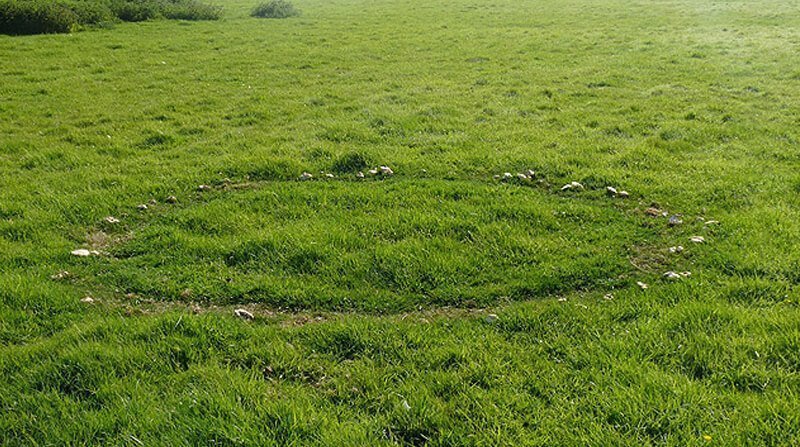
This kind of infection causes rings of dead grass with toadstools at the edges. Usually in the early Summer and Autumn when the soil is moist and temperatures are mild.
The fungi in a Type 1 Fairy ring coats the soil particles with a waxy layer that repels water. The roots of the grass plant are then starved of moisture.
As a result, the soil dries out and runs out of nutrients so the grass dies. This dead grass is more often than not surrounded by lush, green grass. This lush grass appears as the Mycelium advances outwards to break down new organic material.
It is caused by nitrifying bacteria which releases nitrogen and other nutrients into the soil for the grass to consume. Then, as the fungi coats the soil with its waxy layer, the soil dries out, the grass dies and the Mycelium advances further outwards again.
This dead grass is then a prime area for other problems like weeds and moss to take over.
Type Two Fairy Rings
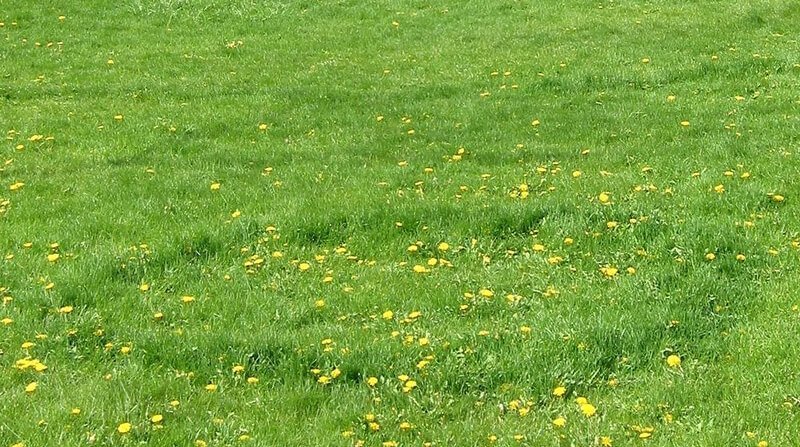
Type 2 Fairy Rings produce a ring of grass that is greener and grows quicker than the rest of the lawn.
They’re most noticeable in stressed or neglected lawns where the grass isn’t as lush and as thick as it should be.
The lush green ring is produced in the same way as a Type 1 Fairy ring but the difference is that Type 2 rings are confined to the thatch layer. They don’t damage the grass plant or cause the soil to become hydrophobic.
They can sometimes produce Puffball Mushrooms.
Type 3 Fairy Rings
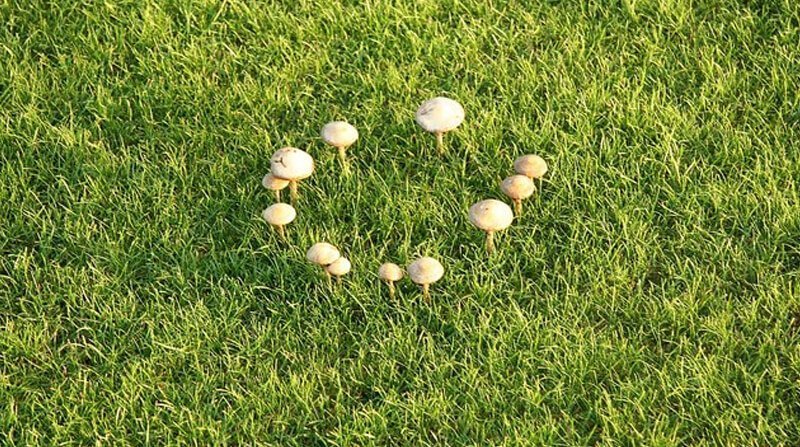
Type 3 Fairy rings are the simplest of them all and very rarely affect the grass at all.
They don’t create bare patches or areas of lush growth. Instead, they create simple mushroom rings. They occur in areas of poor drainage or areas that receive large amounts of rainfall or irrigation.
How to Remove Fairy Rings From Your Lawn
If you have a Fairy Ring or Fairy Rings in your lawn it’s important to correctly diagnose if it a type 1, type 2, or type 3.
Each one requires a different method of treatment.
If You Have Type 1 Fairy Rings
If you find that you have Type 1 Fairy Rings in your lawn then get ready for a battle and potentially some expense.
Your First Course of Action
The fungi that create a type 1 ring coats the soil particles in a water-resistant waxy layer. As such, you need to try and get water into the soil.
Firstly, spike the area thoroughly either with a garden fork, aeration sandals or rolling aerator.
The deeper you can spike the better.
Make sure you spike the ring and a meter either side of it.
Next, you’ll need to apply a wetting agent to help break down the water-repelling properties in the soil.
Finally, water your lawn for at least five days (preferably 10 days) if rain isn’t expected.
Do this in the Spring before the Fairy Ring(s) dry out and repeat the treatment several times during the drier months.
When the lawn starts to respond to the treatment you need to;
- Add a fertiliser to the area, and
- Either re-seed or re-turf the area
Do this before weeds get a chance to establish themselves.
If That Doesn’t Work
If the Fairy Ring(s) are still present and don’t respond to treatment you’ll need to apply a fungicide.
Again, Spring is the best time to do this when the fungi are actively growing.
Fungicides will need to be applied by professional because;
- They aren’t cheap
- A professional will know which fungicide to use based on the fungi in the lawn
Be prepared for the cost to escalate at this point because it regularly takes more than one treatment.
If All Else Fails
If the first two treatments fail you have two options left;
-
Dig the area out, including a meter either side of the Fairy Ring. Also, remove the soil to a depth of a meter and replace it before re-seeding or re-turfing. That’s a lot of soil to replace though which can be expensive.
-
Your second option is to convert the area into a flower bed. The fungus doesn’t respond well in disturbed soil and will not grow in a flower bed.
If You Have Type 2 Fairy Rings
Type 2 Fairy Rings are little understood and have no known cure. What we do know is they’re confined to the thatch layer. That said, they are fairly easy to blend into your lawn.
The best way to do this is to first remove any toadstools and then scarify your lawn to reduce the amount of thatch.
Once you’ve sacrificed, overseed your lawn and apply a good quality fertiliser (CLICK HERE to see what I think are the best fertilisers). A dose of iron sulphate from time to time in the drier months will also help. This will keep the rest of the lawn green and healthy.
Then when you cut the grass, it should be barely visible.
If You Have Type 3 Fairy Rings
Type 3 Fairy Rings don’t affect the visual appearance of the grass at all which makes them very easy to deal with.
All you need to do is remove the mushrooms.
How to Prevent Fairy Rings From Growing in Your Lawn
Because fungi is ever-present in your lawn, the potential for Fairy Rings to form is always there.
The fact is that you can’t completely prevent them.
That said, there are things you can do to make their appearance less likely;
Aid Water Penetration by Aerating Your Lawn

It’s important to keep your lawn well aerated to aid water penetration into the soil.
Spike your lawn with a garden fork, aeration sandals or rolling aerator every spring and Autumn.
Removing cores of turf in the autumn with a hollow tine aerator every 2-3 years will also reduce soil compaction. This allows water and air in amongst the soil particles which reduces the chances of certain fungi producing their water repellent, waxy layers.
Reduce Lawn Thatch With Scarification
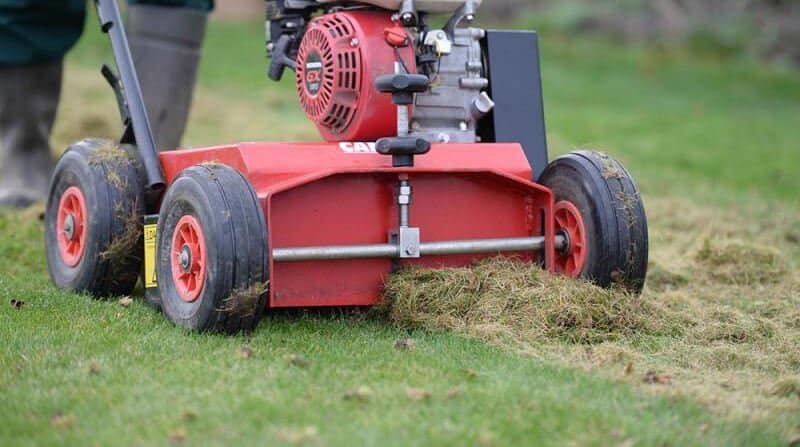
As you now know, Fairy Rings can form as Fungus feeds on dead organic matter in the thatch layer.
Reducing the amount of lawn thatch will take away some of the food that the fungus feeds on. This, in turn, reduces the chances of Fairy Rings forming.
Scarify your lawn every couple of years to remove excess thatch from your lawn (CLICK HERE to See the Best Scarifiers)
Apply a Wetting Agent in the Dry Months to Keep Soil Moist
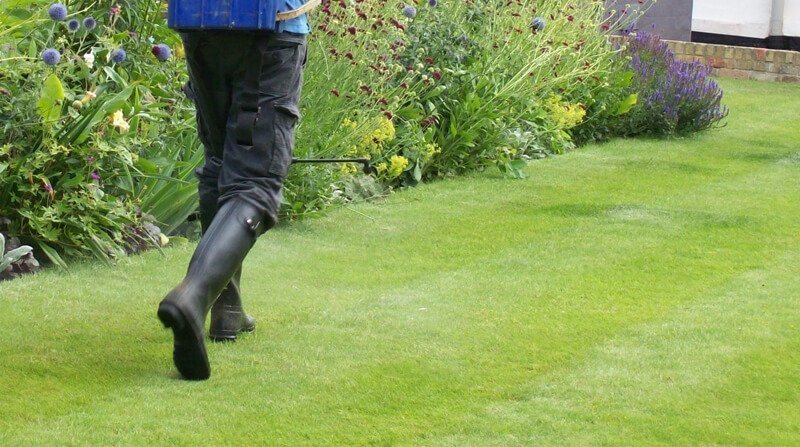
Type 1 and Type 2 Fairy Rings cover the soil particles in a waxy, water-repellent layer. If the soil is dry they will have an easier time establishing themselves.
Help the soil to retain moisture by applying a wetting agent during the dry summer months. This will prevent the waxy layer from establishing.
Top Dressing Will Help Break Down Organic Material

To compliment aeration and scarification, top dressing your lawn with a good quality lawn dressing soil will improve drainage, control the build-up of thatch and stimulate new grass growth.
This should be done when the grass is actively growing and will prevent the fungi Mycelium from becoming established in the soil.
These jobs should all be part of a regular lawn care program as well as regular mowing and fertilisation.
To Conclude
Fairy Rings are a problem you really don’t want in your lawn. They don’t look nice at all and can cost a lot of time and money to fix.
Like most things when it comes to lawn care, the prevention of Fairy Rings boils to good lawn care practices.
Aeration, scarification and irrigation are the keys to preventing them.
If you do find yourself with a Type 1 Fairy Ring in your lawn, I don’t envy you. Go through the steps I outlined with patience.
I’d love to hear your stories and see your pictures when it comes to Fairy Rings. If you have a story or any questions, let me know in the comments.

