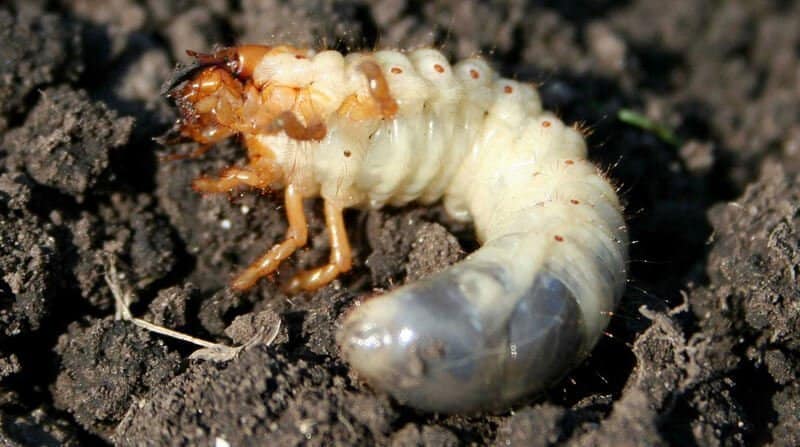
In most cases, the presence of Chafer Grubs in your lawn is nothing to worry about. They’re part of the natural balance of living organisms that inhabit your turf.
However, an infestation of Chafer Grubs can cause a lot of damage to a lawn.
In fact, I have re-turfed several lawns as a result of bad Chafer Grub invasions.
Although Chafer Grubs can damage the grass, it’s often not them themselves that cause the most destruction.
It’s the animals that like to eat them!
What Are Chafer Grubs?
Chafer Grubs are the larvae of Chafer Beetles, of which there are six species;
- The Welsh Chafer
- The Summer Chafer
- The Brown Chafer
- The Cock Chafer
- The Garden Chafer
- The Rose Chafer
The most recognisable of these in the UK is the Cock Chafer, a large beetle which you’ll see between May and June. Hence their nickname, the June Bug.
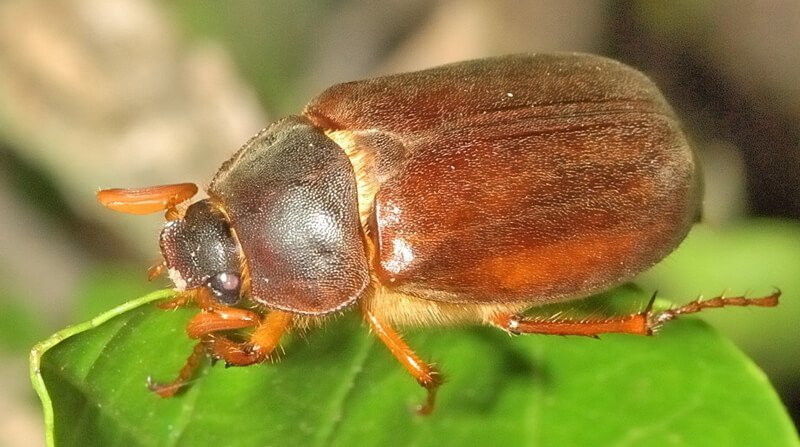
That said, the problems caused in lawns are most commonly caused by the Garden Chafer and the Welsh Chafer.
The beetles themselves don’t cause any damage at all to your lawn. It’s the larvae, or Grub that’s responsible.
What Does a Chafer Grub Look Like?
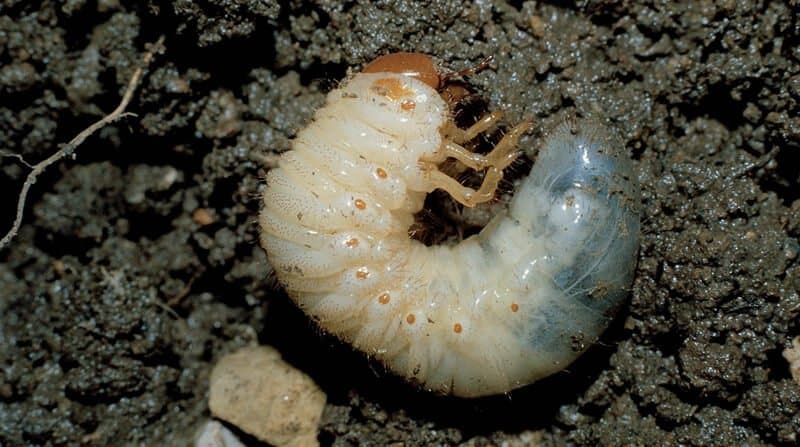
Chafer Grubs typically have thick, cream coloured bodies that turn darker towards the back end. They have light brown/orange coloured heads and three pairs of legs.
Garden and Welsh Chafer Grubs are typically between 10mm – 15mm long and you’ll see them lay in the soil under the turf in a ‘C’ shape.
When Do Chafer Grub Attacks Occur?
In order to effectively treat (or prevent) a Chafer Grub infestion it helps to understand the life cycle of a Chafer Beetle.
This infographic by Waltons explains it perfectly;
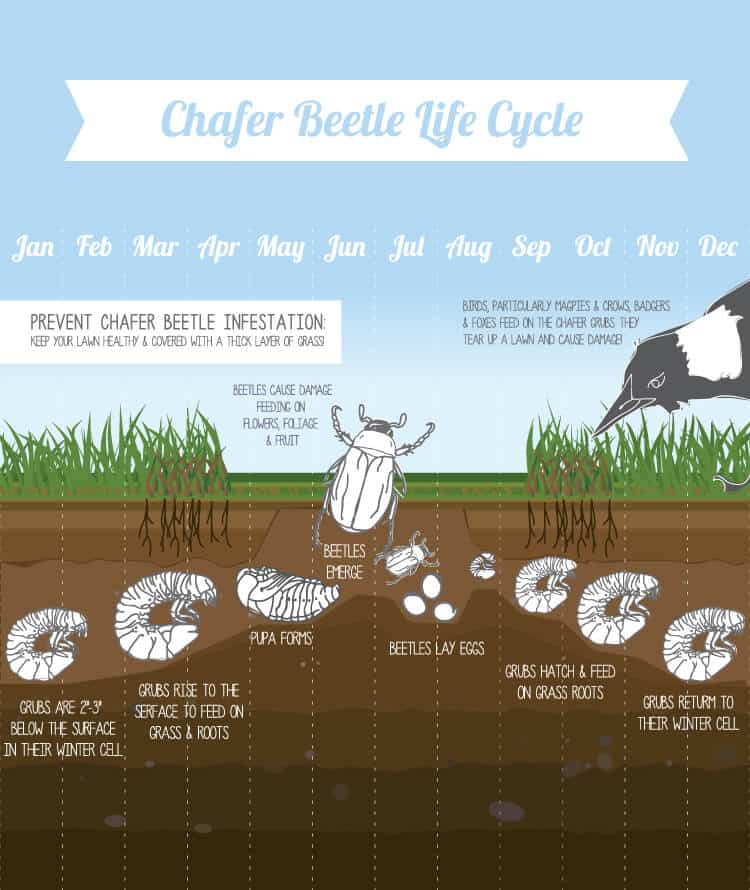
You’ll normally see signs of a Chafer Grub infestation when the grubs are close to the surface, just underneath the turf. Typically in Spring and Autumn.
They can also cause problems in newly cultivated soil and in neglected lawns.
Female beetles burrow into the soil during the summer. They lay their eggs and the larvae hatch out a few weeks later in early autumn when they start to feed on the roots of the grass. They live and feed in the soil for up to 4-5 years depending on the species, pupating over the winter and hatching out as adults in the Spring.
Chafer Grub attacks are very unpredictable.
They can cause huge problems some years and not others and your lawn could be riddled with them and your neighbours might be perfectly OK.
They’re almost impossible to predict but they’re simple enough to spot.
How to Tell if You’ve Got a Chafer Grub Infestation
Chafer Grub invasions are pretty easy to spot.
Often times, patches of your lawn can become yellow and the grass can loosen. This is the result of Chafer larvae causing damage by eating the roots of the grass.
Yellow patches of grass could be caused by other things so if you see it, don’t automatically assume it’s Chafer Grubs. If parts of your lawn turn yellow, remove a small section of turf and if it’s full of grubs, then you’ve got a problem.
If that doesn’t give it away, this will;
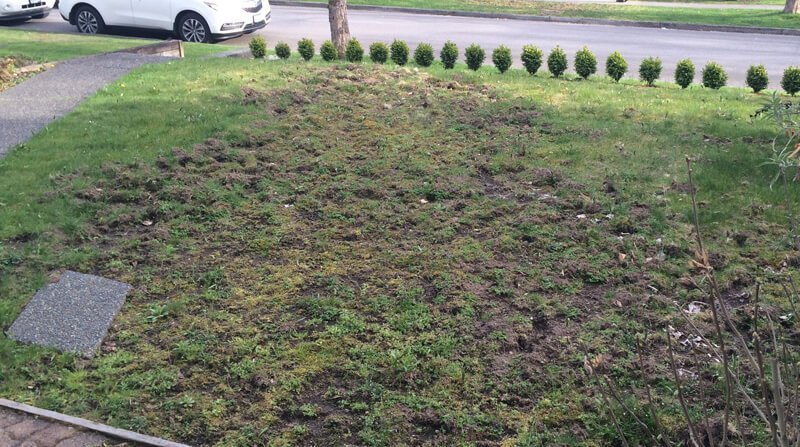
This is the result of birds like Jays, Magpies, Rooks and Crows tearing up the lawn so they can feed on the larvae. In the worst cases, Foxes, Hedgehogs and Badgers will dig into your lawn to eat them.
Moles also feed on Chafer Grubs. If you live in rural areas, you might also start to find molehills appearing as they look for food.
What to Do if You Have a Chafer Grub Problem
Depending on the severity of the infestation you may choose to do one of two things;
- Repair the lawn
- Replace the lawn
My preferred method is to replace the lawn, especially if the infestation is particularly bad.
Weight up the costs involved in repairing your lawn versus replacing it. If you’ve only got a small area of grass, it’s often more cost-effective to replace it (and you have a much higher chance of successfully removing the problem).
Repair the Lawn
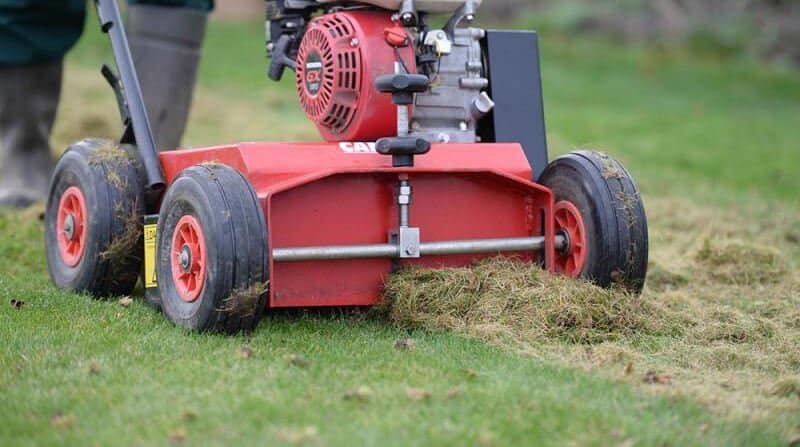
If the damage isn’t so severe you might get away with repairing your lawn.
If this is the case, follow these instructions;
Step 1: Scarify Your Lawn
If you’ve had an infestation of Chafer Grubs the first thing you should do is scarify your lawn. Here’s why;
- It’ll remove any excess lawn thatch and open the soil up to create a bed on which to grow new grass seed.
- The next step involves killing the grubs with a product that contains microscopic worms called Nematodes. Removing excess thatch and opening up the soil will mean the worms can get into the soil quicker.
You must scarify BEFORE applying the grub killer. If you apply the grub killer and then scarify you’ll disrupt the soil while the Nematodes are trying to work. This will make it less effective.
Read: How to Scarify Your Lawn From Start to Finish
Also Read: Which is the Best Lawn Scarifier?
Step 2: Kill the Chafer Grubs
The only way to deal with Chafer Grubs in your lawn is to kill them by applying a product called Nemasys Chafer Grub Killer.
No products found.
This product contains microscopic worms called Entomopathogenic Nematodes which prey on Chafer Grubs, infecting them with a fatal bacteria.
These worms then reproduce inside the dead grubs and a new generation is released to prey on more Chafer Grubs.
Granted, it sounds like something out of a horror film but the fact is, it works.
However, No products found. only works when;
- The grubs are active and close to the surface of the soil
- The ground is moist, and
- When temperatures are above 12°C (54°F)
This means applying it in the Autumn, typically late August through to the end of October. If you’ve had a bad infestation, apply it in the spring too, early April to the end of May while doing your other spring lawn jobs.
It’s important to keep the soil moist for at least two weeks after application. If it’s dry, keep the lawn watered.
Step 3: Overseed Your Lawn With New Grass Seed
Scarifying your lawn leaves it looking a bit of a mess with patches of bare soil visible.
If you leave it as it is, weeds and moss will likely inhabit these areas instead of grass. So it’s important to overseed with a good quality grass seed.
You can buy different types of grass seed depending on the type of lawn you own.
Read: How to Re-seed Your Lawn
Step 4: Add a Fertiliser
Once you’ve overseeded, apply a good quality pre-seeding fertiliser. This will help the new grass seed germinate and develop a healthy root system without affecting the Nematodes.
Read: Everything You Need to Know About Fertilising Your Lawn
Keep your lawn well-watered and you should see new grass shoots appearing after 10-14 days. After a few weeks, your lawn should be back to its former glory.
IMPORTANT NOTE: Be prepared for a battle. The Chafer Grubs in your lawn might be at different depths depending on where they are in their life cycle (remember, they can live in the soil for up to 4-5 years!).
One application might kill the older, more active grubs that are close to the surface but chances are there will be younger grubs hiding deeper in the soil.
These youngsters might not cause a problem for a year or two but when they reach maturity, you might have to go through all this again.
Replace the Lawn
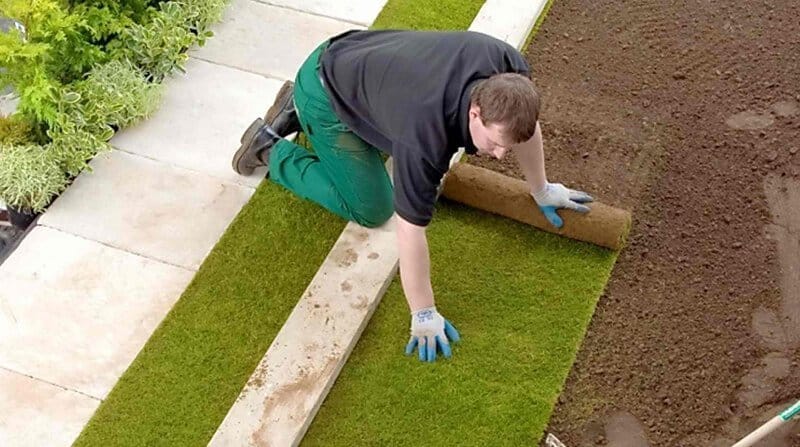
When it comes to repairing the damage caused by Chafer Grubs, my preferred method is to replace the lawn completely.
If you’re replacing your lawn, here’s what to do;
Step 1: Apply a Glyphosate WeedKiller to Kill the Whole Lawn
Apply a weedkiller that contains Glyphosate. This will do two things;
- It will kill all the weeds and their seeds so there is less chance of them growing back through your new turf.
- It’ll also kill the grass which is the Chafer Grubs food supply.
Leave it for a good two weeks to let it work its way into the roots.
If you’re not confident mixing concentrated solutions, use something like Roundup’s Fast Action Weedkiller Pump ‘n’ Go Spray.
No products found.
If you’re happy to mix a concentrate and you have a knapsack sprayer to apply it, then I recommend Elixir Garden’s Home and Garden Glyphosate Commercial Strength Weed Killer Concentrate.
No products found.
Step 2: Remove the Dead Turf
After a couple of weeks when your lawn is well and truly dead, remove the turf. You can do this with a spade or turfing iron. If you have a large area of lawn, you can hire a turf cutter.
Step 3: Rotovate or Dig the Turf
If you have a small lawn you can get away with digging the area over but be prepared for hard work.
Alternatively, hire a rotavator – especially if you have a large area to dig.
Leave the soil open for a day or so and the birds will come and eat the Chafer Grubs. Keep turning the soil over each day for a couple of weeks to expose as many Chafer Grubs as possible.
Your local bird and wildlife population will feast!
Alternatively, you might want to apply Nemasys Chafer Grub Killer (see above).
Step 4: Prepare the Ground and Lay Your New Turf
After a week or so of turning the soil, the Chafer Grub population should be pretty much non-existent.
Now it’s time to prepare the ground for laying new turf.
Laying turf is a subject that is beyond the scope of this article but don’t fear. I have an article that shows covers the whole subject, from preparing the ground to laying your new lawn.
How to Prevent Chafer Grubs From Infesting Your Lawn
You’ve seen the damage that can be done as a result of a Chafer Grub infestation and you’ve spent time and money repairing or replacing your lawn.
So how do you prevent your lawn from falling victim to Chafer Grubs in the future?
Here are a few ways to prevent Chafer Grub invasions;
Adhere to Good Lawn Care Practices
Good lawn care practices are the best way to prevent Chafer Grub invasions. Just a few simple tweaks in how you do things can vastly reduce the chances of an infestation.
Cut the Grass Longer than You Normally Would
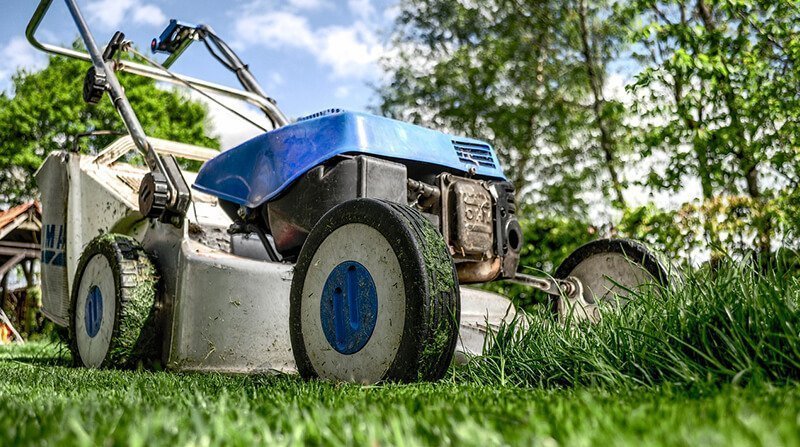
We all like bowling green lawns but the fact is, beetles don’t like long grass.
Cut the grass regularly but keep the mowing height a little higher than you normally would during the summer months (June, July and August) when beetles are actively looking for somewhere to lay their eggs.
Keeping the grass relatively high during the summer is good practice anyway as it improves drought tolerance.
Keep Your Lawn Aerated
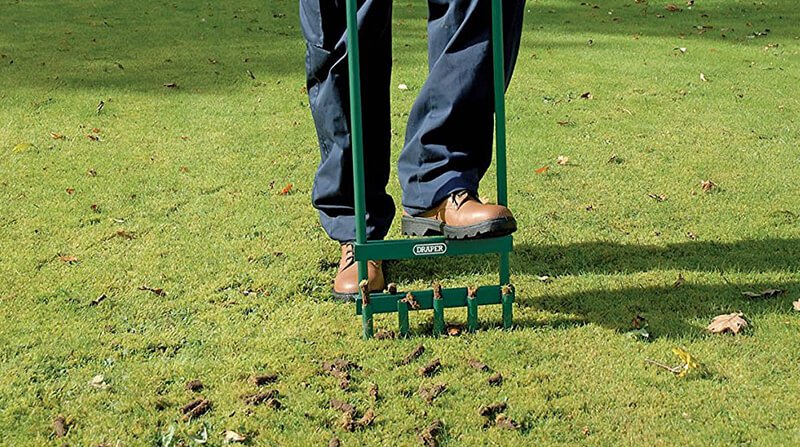
Chafer Beetles prefer to lay their eggs in more compacted soil.
By keeping your lawn aerated you keep the soil relaxed which isn’t as preferable to the beetles.
Also, get a pair of aerating sandals. Tread your lawn with them once a week during the months of March, April and May, then in September and October.
This is when the Grubs are closest to the surface. By treading your lawn once a week with these sandals you can effectively control the numbers of grubs by killing them with the spikes on the sandals.
No products found.
Apply Ferrous Sulphate in the Summer
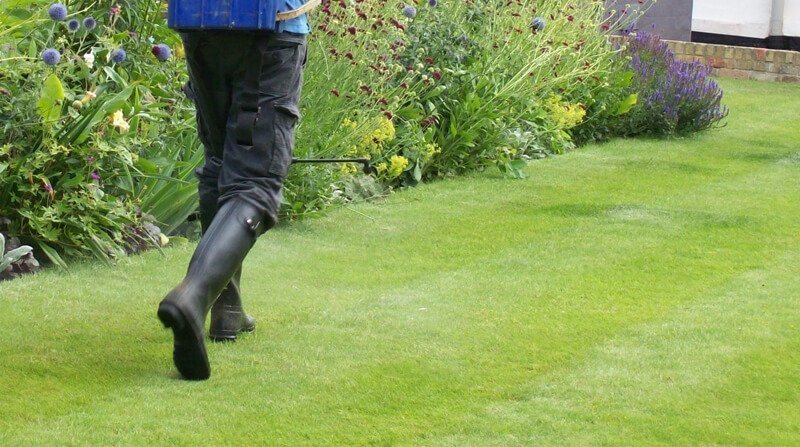
Ferrous Sulphate isn’t just a moss killer.
It can be used to keep your lawn fertilised during the dry summer months. Not only does it give your grass a nice green boost in the summer when it doesn’t look its best, it also raises the acidity of the soil.
And Chafer Beetles don’t like acidic soil!
Don’t Over Water
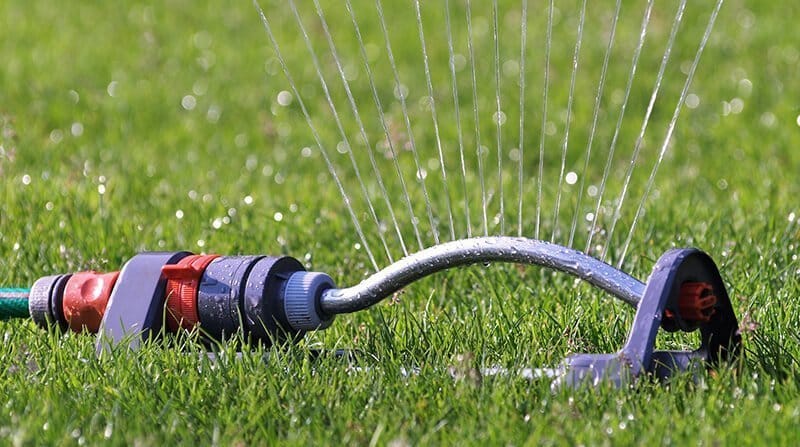
Water is essential to the health of your lawn but keep watering to a minimum during the summer months.
Beetle eggs will die if there isn’t a good supply of water. If you must water, keep it to once a week and to a depth of around an inch.
Keeping the grass on the high side and applying Ferrous Sulphate will improve the grass’s tolerance to drought and keep it green.
Unless the grass experiences a severe drought, you shouldn’t really need to water.
Apply Nematodes as a Precautionary Measure
Another measure you can take is to keep your soil stocked up with Nematodes during the Spring and Autumn.
This will control Chafer Grub numbers and stop them from getting out of hand in the first place.
In Conclusion
There’s no getting around it, Chafer Bugs are a lawn keepers bitter enemy.
But I said it at the very beginning of this article and I’ll say it again now…
The presence of a few Chafer Grubs in your lawn shouldn’t cause you to panic. Most well-maintained lawns have them and aren’t negatively affected.
Just follow the lawn care practices above and you should be able to keep them to a minimum.
However, if your lawn resembles the dinner table of the local wildlife, you need to act.
The fact that these kinds of infestations are erratic and hard to predict makes things even worse. Still, it is possible to return your lawn to its former glory.
If you have any questions, please leave a comment below.
I’d also love to see any before and after pictures. If your lawn has been ruined as a result of Chafer Grubs, take a picture and send it in. Even better, if you plan on repairing your lawn, send a before and after picture and I’ll share it with the community.

