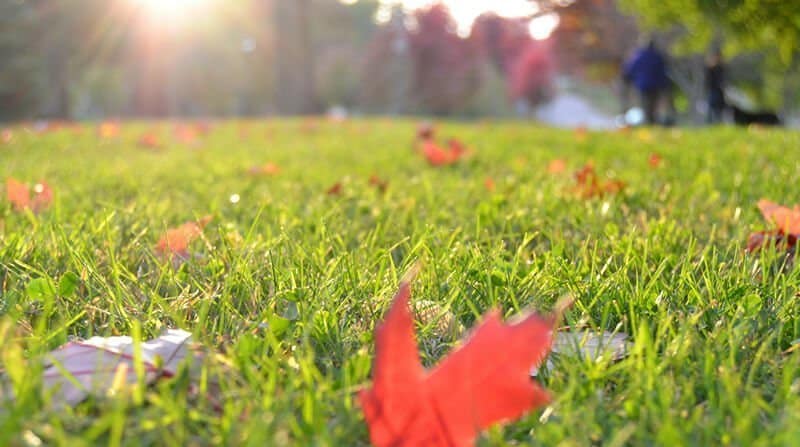
Autumn is the busiest time in the lawn calendar so, in this article, I’m going to show you my autumn lawn care program.
If you kept on top of your spring and summer tasks, then it should just be about preparing your lawn for the stresses of winter.
However, if it’s been neglected over the spring and summer, or for the past several years, this is the perfect time to put that right.
When to Start Autumn Lawn Care Treatment
September is when you should start thinking about starting your autumn lawn maintenance tasks.
Depending on the current state of your lawn, some of the treatments you’ll hit it with are invasive and can leave it looking a bit of a mess.
In order for it to recover quickly, you need the right weather. This means plenty of rain, sunlight and warmth.
September provides these conditions.
There are also very few weeds seeds floating around at this time of year so it lowers the risk of a takeover after invasive treatments.
It’s important to note that unlike in the spring when temperatures increase, at this time of year they start to drop.
This means you don’t have as much time to get through the work. I personally like to get all of the work done as quickly as possible. That way the lawn can recover quickly while temperatures are still good.
The longer you leave it, the cooler it gets and the slower it will recover.
Autumn Lawn Care and Renovation Tasks
If your lawn is in relatively good shape, then chances are, you’ll not need to do all of the jobs on this list.
You might only need to keep mowing and apply a fertiliser.
However, if it’s tired and in need of restoration, you’ll need to go all in.
Cutting the Grass
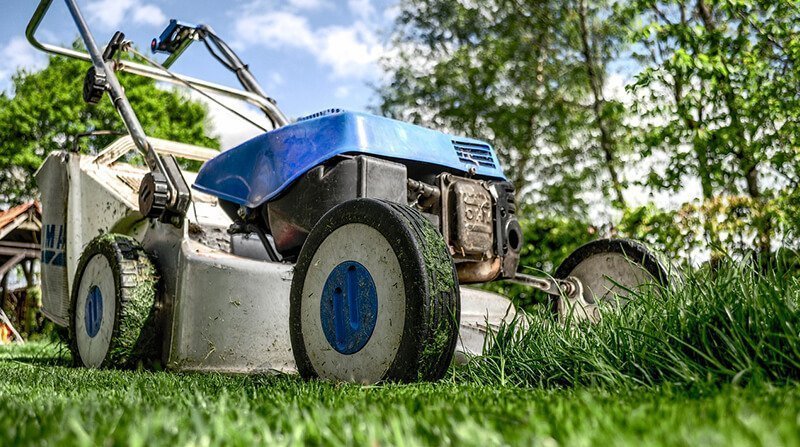
If your lawn is in good health then keep mowing.
Conditions for grass growth are perfect so increase your mowing frequency to at least once a week and reduce the height of your mower if you like a closer cut.
Make sure to never remove more than a third of the grass leaf at a time. Mowing the grass really short all at once is never a good idea.
If there’s moss which you plan to get rid of, then keep the grass an inch taller.
As grass growth starts to slow down in October and November raise the height of mower by a setting or two so the grass is a little taller going into the winter.
Apply a Weed Killer to Any Weeds
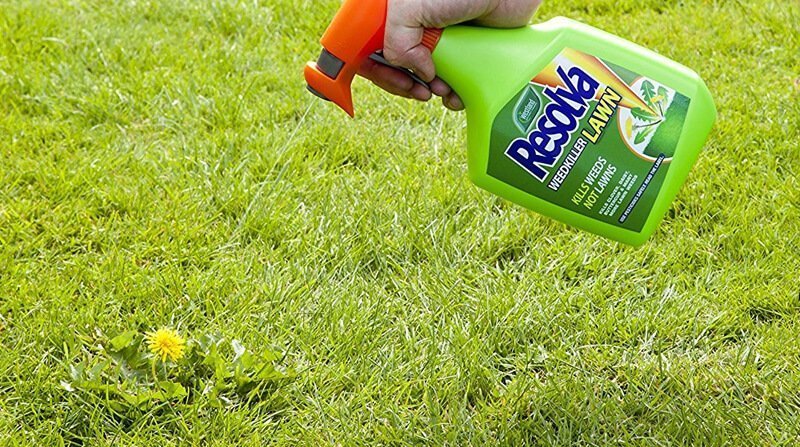
If you kept on top of any weeds during the year then your lawn should be weed-free. That said, keep your spot spray week killer to hand and blast any that might appear.
If you have quite a few, apply a weed killer to the whole area. Do this right at the beginning of September while they’re actively growing.
Doing it later on when growth slows down will have little effect.
It’ll take a week or so to kill all the weeds.
Also Read:
Kill and Remove Any Moss
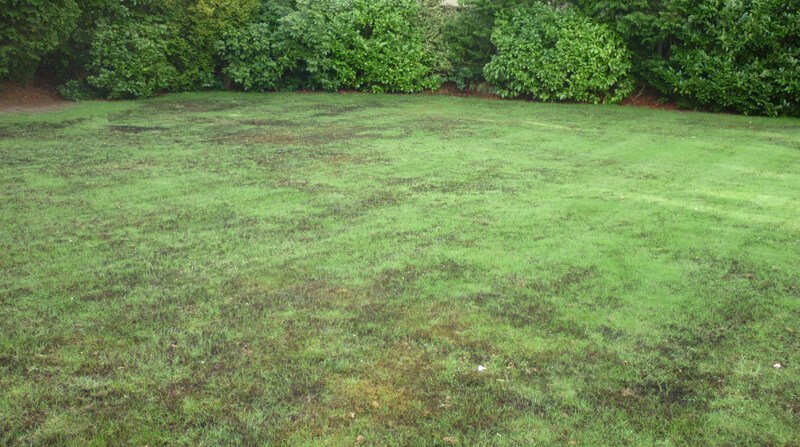
Again, if your lawn is healthy then hopefully it’ll be moss free.
If so, well done!
However, if there is moss you need to get rid of it. Apply your preferred moss killer and give it a week to work and kill it.
The rake out the dead moss with either a powered rake or springbok rake.
It’s a good idea to rake lengthways and once you have done, go over it again at a 45-degree angle. This will remove as much moss as possible.
Also Read:
Scarify to Remove Excess Thatch
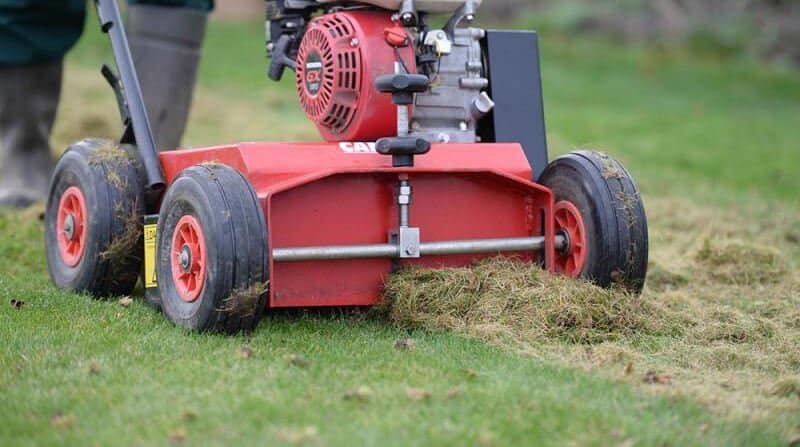 If your lawn is suffering from a thatch problem, now’s the time to scarify heavily.
To remove it you’ll need to scarify.
Set your scarifier on a reasonably high setting and see how much material it removes. If there’s not much, lower it by one setting and try again. The aim is to remove as much as possible without churning up the grass and soil.
Go up and down lengthways and then go over it a second time at a 45-degree angle, raking up the debris after each pass. You’ll be amazed at just how much the scarifier removes.
Aerate to Relieve Soil Compaction and Improve Air Flow
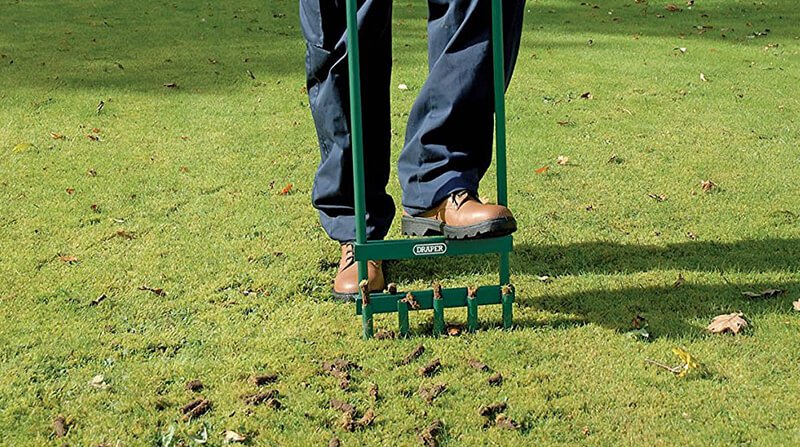
If the soil isn’t compacted, aerate using spikes. You can either use a garden for or rolling spike aerator. This will improve rooting environment for the grasses roots.
If the soil is compacted or made up of heavy clay, you’ll want to aerate via hollow tining.
You can buy hollow-tining forks like the one you see above or you can hire a machine from your local hire shop. If you use a hollow-tining fork, this job could take several days depending on the size of your garden.
If you have large lawns, hire a machine and you’ll get through it very quickly.
Hollow-tining removes cores of turf, creating hundreds, if not thousands of little holes.
These holes allow the existing soil particles room to relax into and separate from each other.
This, in turn, allows water, air and nutrients to get into the root zone of the grass and encourages new growth.
Apply a Top Dressing to Add Nutrients to the Existing Soil
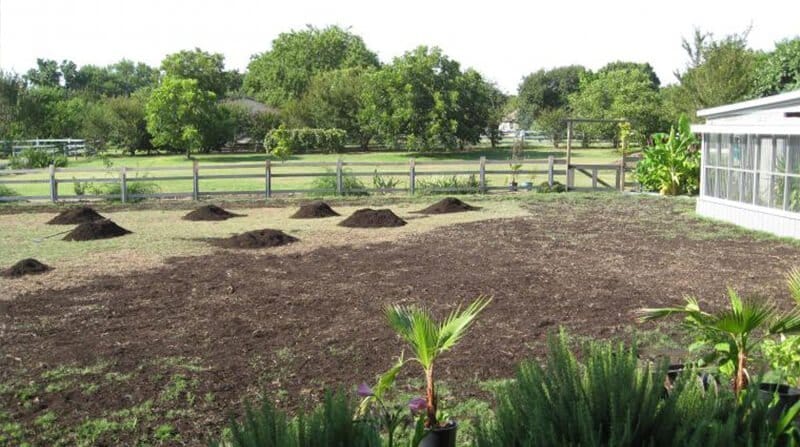
If your lawn is in fairly good condition you might choose to skip this step.
However, if you’re a serious lawnsmiths with putting green lawns, or if you’re renovating, top dressing is essential.
Do it after scarifying and aerating.
Top dressing adds nutrients not only adds nutrients to the soil. It also adds micro-organisms which break down organic material, controlling the build-up of thatch.
It also evens out any bumps in the surface of your lawn to make it flatter.
Don’t apply the top-dressing too thick though. 75% of the current grass leaf should be visible.
Also Read:
Overseed With New Grass Seed
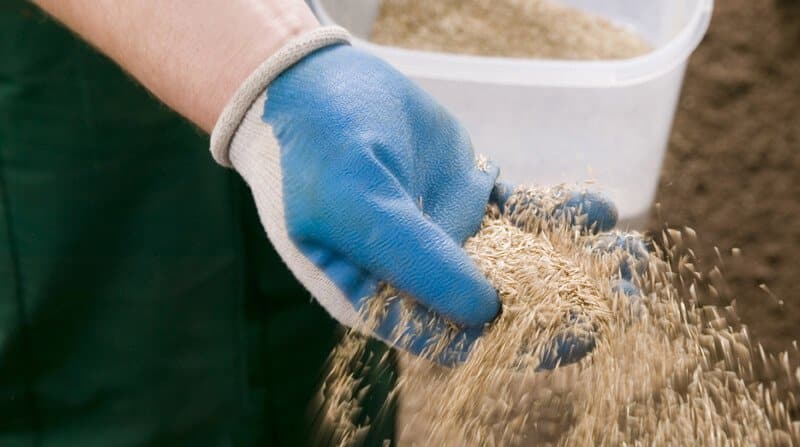
If you’ve raked, scarified, aerated or top-dressed, you should spread new grass seed.
This will fill in any bare patches and prevent them from being invaded by moss or weeds.
For best results, choose a grass seed mix which is right for your lawn. For example, if it’s covered by shade, choose a seed mix made for shade. If the kids play football on it during the summer, choose a hard-wearing seed mix.
Also overseed the whole area, not just bare patches. This will keep it looking uniformed instead of having patches of different grass.
Lastly, use a spreader distribute the seed evenly.
Also Read:
Apply an Autumn Lawn Feed
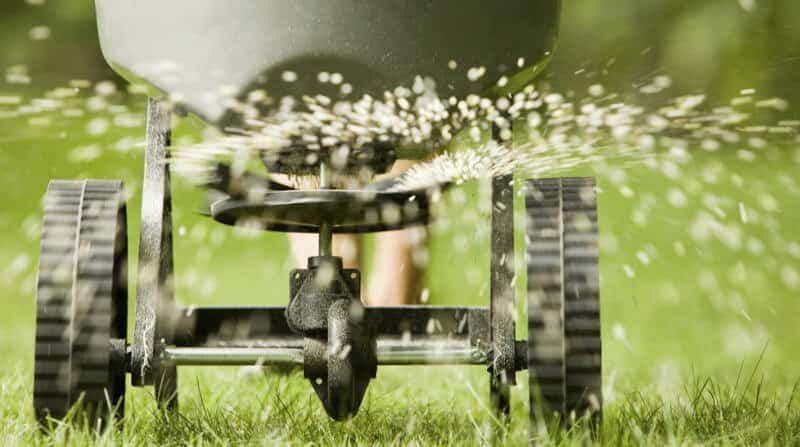
It’s important to feed your lawn in autumn for two reasons;
It’ll replace the nutrients the grass used up during the summer months, and also harden the turf in preparation for the colder months ahead.
Make sure you use an autumn/winter fertiliser as it contains less nitrogen than spring/summer lawn feed. If you use a spring/summer feed in autumn, you’ll cause the grass to surge in growth when it should start slowing down.
Also Read:
Water (If Needed)
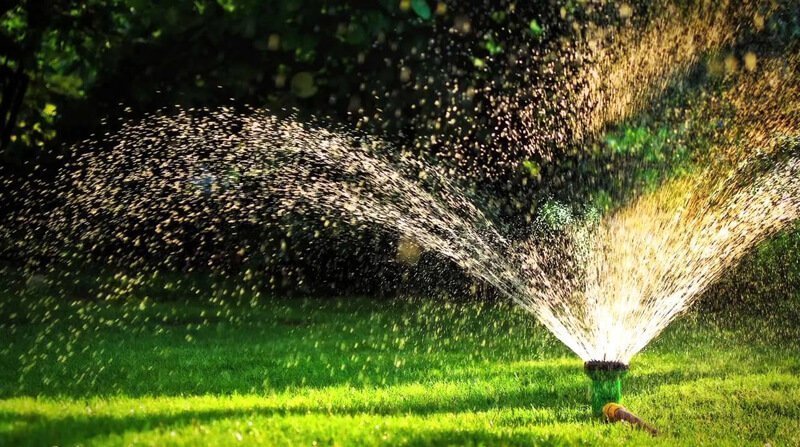 Hopefully, the rains come in September and you can get your autumn jobs done on the dry days.
However, if we experience an Indian Summer and the sun hangs around and the rains don’t come, you’ll want to turn the sprinklers on.
Watering is now important.
You need to activate the fertiliser, encourage new grass seed to germinate and existing grass to grow if the lawn is to recover as quickly as possible.
Clear Leaves and Debris
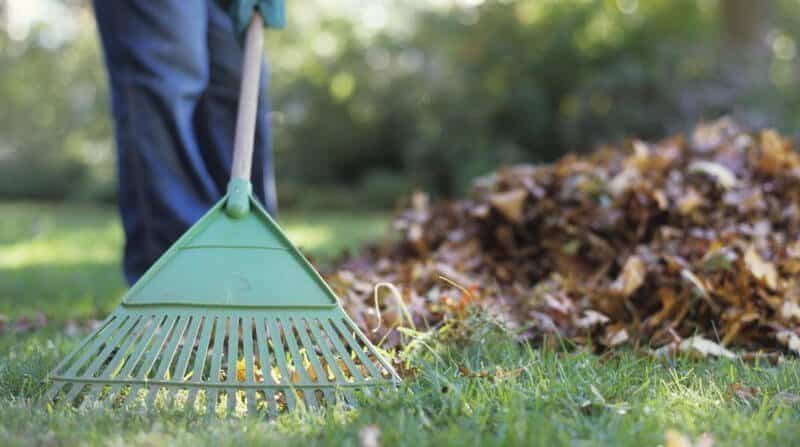
As the autumn weeks go by, leaves will start falling off the trees and bushes in your garden.
It’s important to keep them off the grass to avoid the onset of diseases like Dollar Spot, Rust and Red Thread.
They also cause an increase in worm activity.
Remove any leaves on at least a weekly basis with a rake or garden vac. You can also use your rotary mower to suck them up.
Deal With Worm Casts
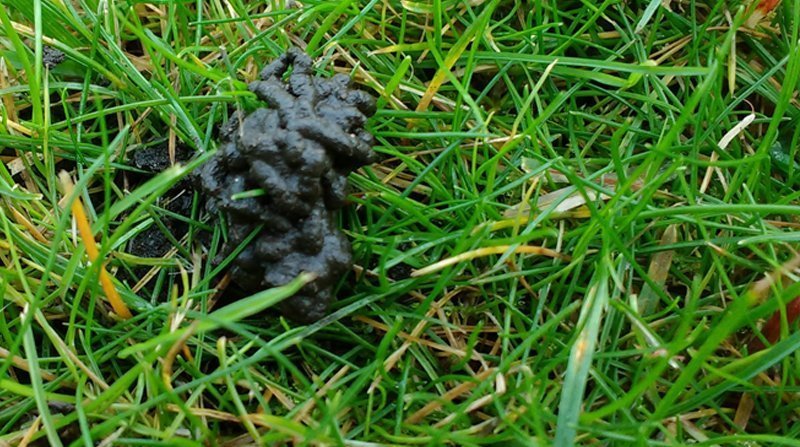
As the weather cools down, worms become more active as they come to the surface to feed on fallen leaves and other debris.
They leaves their slimy worm casts behind which make a real mess.
That said, they’re packed full of nutrients so wait until they’re dry and brush them back into the surface.
Also Read:
In Conclusion
This is exactly how I go about my autumn lawn care regime and renovation projects.
You don’t have as much time to do all the work as you do in the spring. That said, once weeds and moss are dead the rest of the work can be tackled in a couple of days.
If you get this right now, caring for your lawn in winter will be very easy.
