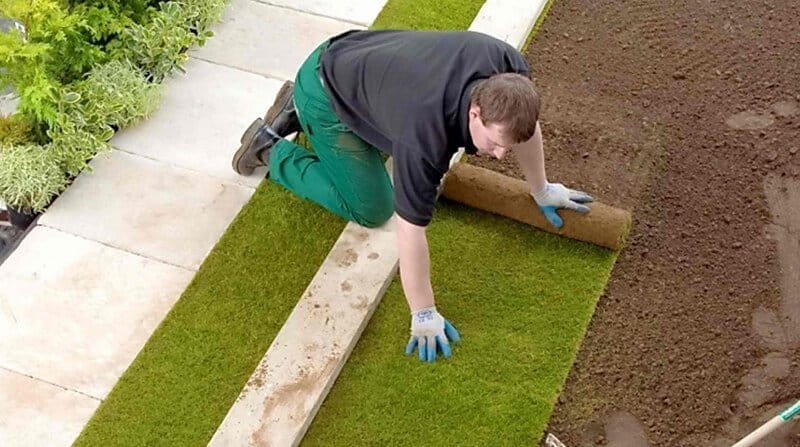
In this article, I’m going to show you how to lay turf, step-by-step and care for your new lawn.
While it’s more expensive than sowing grass seed, laying turf is the quickest and easiest way to create a new lawn. And it means you’ll almost instantly have a good-looking, usable area in your garden.
However, my advice to you is to not even bother reading this article until you have;
- Figured whether you definitely want to lay turf or whether grass seed might be a better option
- Prepared the ground properly beforehand, and
- Figured out how much turf you need
These articles will help;
- Which is Best For Creating a New Lawn, Grass Seed or Turf? – I’ll show you the differences between laying turf ad sowing grass seed. From a cost perspective, the work involved, and the time it takes before you can use and enjoy your new lawn.
If you need to know how to prepare the ground for turf, read this article first:
- How to Prepare the Ground For Laying Turf -The ground prep is by far the most important part when it comes to creating a new lawn. If you get this part wrong or rush through it, your new lawn could be ruined before it even has a chance to establish. This article explains in detail, how to prepare the ground properly so that your new lawn establishes and grows beautifully.
Then, once you have the ground prepared, you can figure out how much turf you need. If you need help to do this accurately, read this guide:
- Use My Turf Calculator to Work Out How Much Turf You Need – Working out the square meterage of a square or rectangular lawn is easy. Working it out for circles, triangles or other odd shapes is more complex. This article shows you how to measure the area of your lawn accurately using my turf calculator.
So please, don’t even think about ordering or laying turf until you have read these guides, prepared the ground and properly measured how big your new lawn is to be.
When to Lay Turf for Quick Establishment
The best time to lay turf is in mid-Autumn when growing conditions are at their best.
The soil will be warm from the heat of the summer while the rain provides moisture and the sun encourages the grass to grow and roots to establish.
Also, at this time of year, there aren’t many weed seeds floating around which can land on you new lawn and germinate.
That said, you can lay turf at pretty much any time of year;
Laying Turf in Winter
During the winter months, grass plants hold nutrients in the root zone so they can develop strong roots.
This is actually good for new turf because you want it to take root as quickly as possible.
There is also more rain so you’ll save on the cost of watering artificially.
You’ll want to get your timing right to avoid any hard frosts and wet, muddy ground. This is where laying turf in Winter can become tricky.
Laying Turf in Spring
Spring is a decent month to lay turf as the weather is similar to Autumn.
The ground is usually colder than in Autumn so it’ll take a little longer to establish but it’ll soon warm up again and speed up the process.
You’ll need to watch out for weeds though as there are seeds all over the place in spring. If you see them growing in your new turf, remove them manually.
The grass in new turf is fairly weak due to being harvested so applying a weed killer could also kill the grass.
Laying Turf in Summer
Summer is generally considered the worst time of year to lay new turf.
Hot weather combined with the lack of rain can quickly dry new turf and kill the grass before it even has a chance to take root.
That said, you can still lay turf in the summer if you’re prepared to water heavily at least twice a day for several weeks.
This, of course, is expensive.
Tools You’ll Need For Laying Turf
Here is a list of everything you’ll need (or might not need, depending on your situation) to create your new lawn;
Wooden Planks
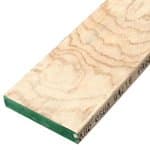 Wooden planks serve three purposes;
Firstly, you can lay turf against them to create straight lawn edges.
Secondly, you should use them to kneel on to prevent creating divots in your prepared ground.
And lastly, you should never walk directly on freshly laid turf as you can damage it or cause it to move. If you need to walk across new turf lay a plank down first and walk across that. It’ll distribute your weight across a larger area instead of having all your weight in one place.
If you’re turfing a small area, a couple of planks will do. The larger the lawn, the more planks you’ll need.
 It’s inevitable that you’ll need to trim the turf as you meet the edges of pathways and garden features.
A good, sharp knife or saw is ideal for trimming lawn turf and easily create nice, neat edges.
Lawn Turf
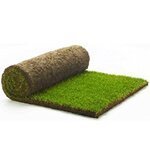 Once you know the type of lawn you want based on how you’ll use it and the soil type, you can choose your turf.
Because you need to lay turf as quickly as possible, it should be the very last thing you order. The time between preparing the ground and laying new turf can be several weeks.
Don’t make the mistake of ordering it first. It’ll be dead by the time you come to lay it.
Hose and Sprinkler
 After laying turf you’ll want to water it in so that the roots and grass establish and the turf knits together to create a nice, uniformed look.
As you’ll want to avoid walking on the grass it’s best to use a hose and sprinkler system.
Read: How to Choose the Best Hosepipe For You and Your Garden
How to Lay Turf, Step-by-Step
Like I said at the beginning of this guide, before learning how to lay turf, make sure you’ve prepared the ground to receive it.
All the hard work is done in the preparation and laying turf is the easy bit in comparison.
It’s also the really fun part because you’ll start to see your new lawn taking shape.
Rolawn has an excellent video which shows you how to do it.
When the turf arrives you need to get to work as soon as you can.
Don’t let it sit there as it’ll dry out and become useless fairly quickly.
Pro Tip: I always give the underside if each turf a spray with water to wet the soil. This ensures good contact with the soil the turf is being laid onto.
Step 1: Laying the First Turf
Start laying turf on the longest border. To create a straight edge, use a plank or a spirit level as a guide. If you’re creating a circular, oval or oddly shaped lawn, start in the middle and work out from there.
Step 2: Laying the Next Rolls of Turf
When laying the next rolls of turf, make sure they’re closely butted together with the one you laid previously. Make sure you push the turf joints together without stretching it and avoid creating gaps.
It’s a good idea to gently knead the ends of the turf where they meet to create a good bond between them.
Step 3: Adding the Next Rows of Turf
When you have laid the first row of turf, it’s time to lay the next. Make sure you lay the turf in an offset fashion, exactly like brickwork.
Staggering all of the joints in this way minimises the risk of the turf drying out.
Again, gently knead the edges together to create a good contact between each roll of turf. If any gaps do appear, fill them in with a light, sandy topsoil.
Step 4: Creating a Firm Contact Between the Turf and Soil
In order for your lawn to establish itself and grow, make sure the turf has a firm contact with the soil beneath it.
You can do this by tamping down on it with the head of a rake or a length of wood.
Step 5: Shaping
When you’re laying a lawn it’s highly likely that you’ll need to shape it around pathways, patios or features in the middle.
Shaping and creating a neat edge around these obstacles is very easy when using a long, sharp knife or a hand saw.
Step 6: Protect the Outer Edges of the Turf
When you have laid your lawn you should protect any exposed edges from drying out. This could be where the lawn meets a flower bed for example.
Pack some soil against the edges to cover them and stop them from drying out. This can be removed after a few weeks if you wish.
Step 7: Water the Lawn
The final step is to water the lawn and give it some much-needed moisture. Use a hosepipe and sprinkler system so water is distributed evenly.
Depending on the time of year, you’ll need to water daily make sure your new lawn establishes well.
Sometimes when you water your turf well, you might see a few mushrooms popping up in the grass. This is perfectly normal and a sign of good moisture and fertile soil so don’t panic.
You can pick them r brush them away but either use a pair of gloves or wash your hands thoroughly afterwards. Preferably both.
Again, make sure you use a plank to walk on when putting your sprinkler in place.
Caring For Your Newly Laid Lawn
So you’ve laid your new lawn and it looks beautiful.
What now?
How should you care for your lawn going forward?
Well, before your turf was harvested, it was happily growing in a field where it had grown roots up to 90cm deep.
Then along came the harvester and sliced the turf off the surface, leaving around 87cm of the roots in the ground.
This causes a huge amount of trauma to the grass so it’s imperative that you take great care of your newly laid lawn.
Watering New Turf

Watering new turf is the single most important part of new turf care.
Water is vital for new turf as it carries the nutrients from the soil to the roots where the grass can use them.
The only part of the grass plants which can consume water is the roots so it’s important to water deeply. A light sprinkling is useless and it will only wet the leaves.
How Often Should I Water New Turf?
This very much depends on the time of year.
New turf needs water at least once a day for the first couple of weeks.
If you lay turf in Autumn or Spring then the rain should help with this but you’ll need to water on the days it doesn’t rain. Also, don’t be fooled by a quick shower. Turf needs watering deeply and a quick shower won’t cut it.
In the winter months, you might not need to water at all if it rains a lot. Still, if there is a lack of rainfall you’ll need to turn the sprinklers on.
If you turf during the summer, you’ll need to water at least twice a day for the first two to three weeks – in the morning and the evening.
The hot sun and lack of rain will dry new turf out very quickly so to combat this you’ll need to water more often and for longer.
How Deep Should I Water New Turf?
You should always water to at least the depth of the grass’ roots.
For example, the roots in freshly laid turf aren’t very deep, maybe an inch.
In which case, water to an inch deep.
However, new grass roots can grow by as much as 15mm a week so you need to water more deeply in the second week than you did in the first.
To measure how deeply you’re watering, place a clear container on your lawn before turning the sprinklers on. When the water is an inch deep in the container, you know you’ve watered an inch deep.
How Will I Know if My Turf is Moist Enough?
The easiest way to tell if you’re watering correctly is to stick a pointed knife into the soil.
When you pull it out, the blade should be cool damp and clean.
If it’s wet and muddy, then you’ve overwatered and should stop. On the other hand, if the blade is warm and dry, then the soil needs more water.
When to Cut New Turf
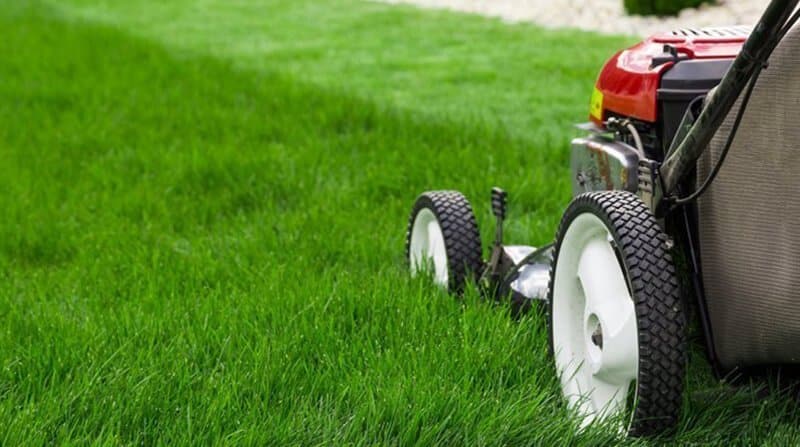
You should mow your new lawn as soon as the roots have taken hold.
This could be after a week or take up to three weeks, depending on growing conditions.
To test if the roots have taken hold, lift a corner of the turf. If you can lift it, wait a while longer.
If the turf stays firmly in place then give your new lawn its first cut.
Make sure your lawn mower blade is as sharp as you can get it. A blunt blade can tear your new turf and cause all kinds of damage.
Also, keep your mower on the highest setting for the first few cuts and only take the top off the grass. The grass won’t yet be fully established yet and cutting it removes part of its food and water supply.
If you mow too low too quickly you’ll cause an untold amount of stress to the grass and potentially kill it.
Only after you’ve mowed the lawn several times on the mowers highest setting should you reduce the height. Reduce the height by no more than one setting each time.
When Can I Walk On My New Turf?
You should be able to walk on your lawn once the roots have taken hold and you can no longer lift the turf at the corner.
Ideally, though, you should only walk on your lawn at this point to mow it.
It won’t cope with heavy traffic or your kids playing football until it has established fully which can take anywhere from 6-12 weeks.
That said, the longer you leave it, the hardier and stronger it’ll be.
When Should I Feed My New Lawn?
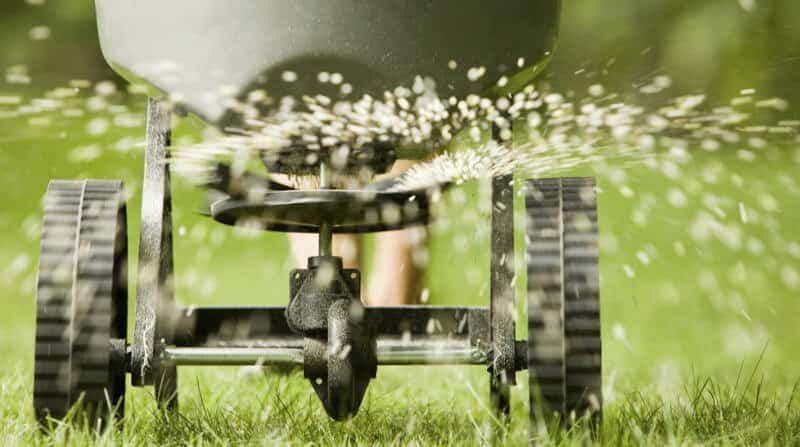
If you used a lawn establishment fertiliser when laying turf, your new lawn shouldn’t need feeding for a while.
Feed the turf after 6-8 weeks with a lawn feed which is appropriate for the time of year.
- Between March and August, use a spring/summer feed
- Between September and February, use an Autumn/Winter feed
There Are Mushrooms in My New Lawn, What Should I Do?

Many people freak out when they see mushrooms in new turf. They think it’s a bad thing or something to fear.
In most cases, the presence of mushrooms in new turf is actually a good thing. They’re an indication of a well-watered lawn.
Harvesting, transporting and laying turf can cause fungus to spore and grow which, in turn, produces mushrooms. It’s perfectly normal and nothing to worry about. Simply remove them.
But was your hands afterwards!
In Conclusion
In this guide, I’ve shown you how to lay turf step-by-step.
Laying turf is really easy, but only provided you’ve prepared the ground properly in the first place.
But laying the turf is only the beginning of creating a lawn your friends, family and neighbours will be jealous of.
You need to care for and nurture it over the long term to create a lawn of real beauty.
Now it’s Your Turn
Have you found this guide useful?
Are you going to try laying turf yourself?
I encourage you to give it a go and if you have any questions or comments, leave them in the comments section below.
I’d also love to see your freshly laid lawns so please, send pictures!

